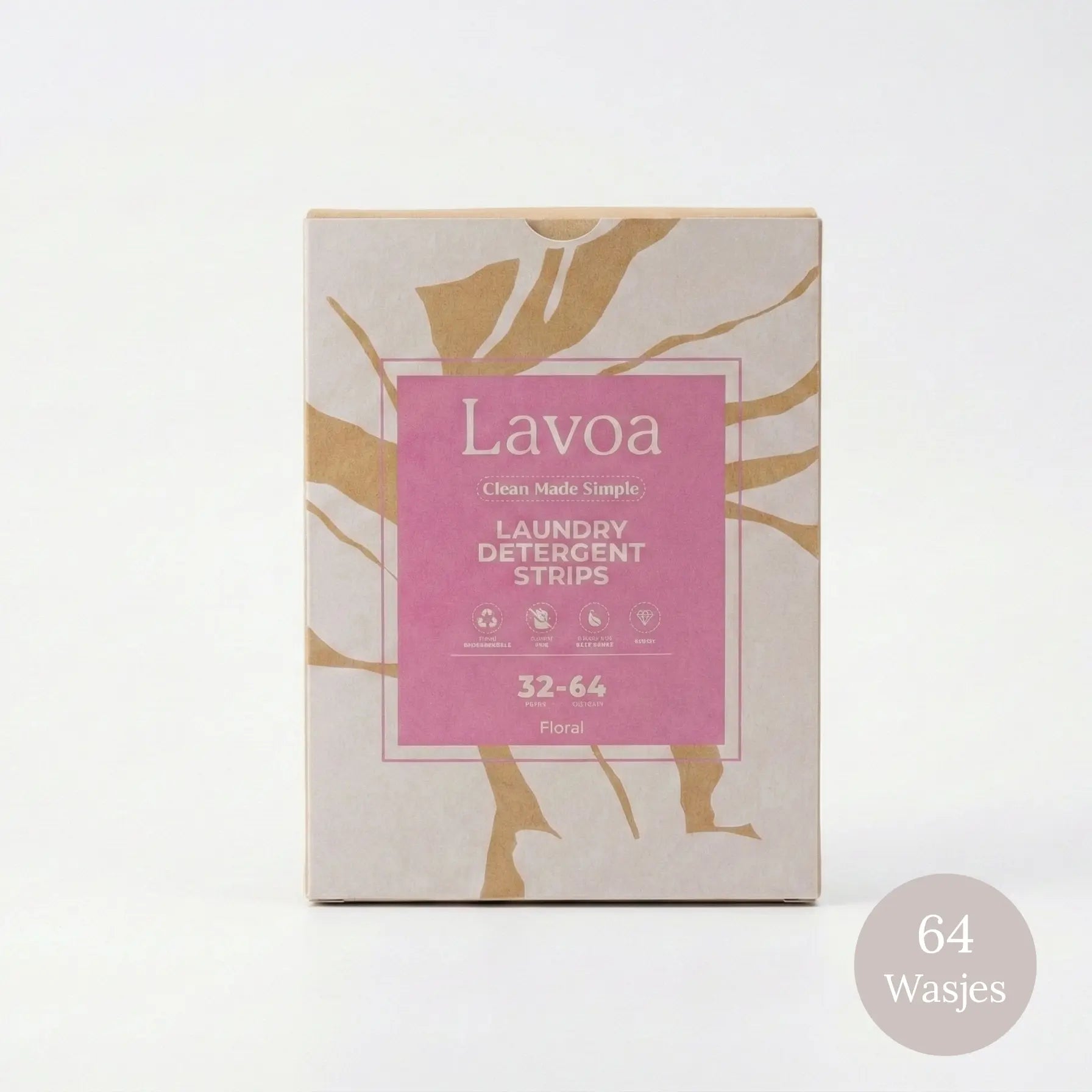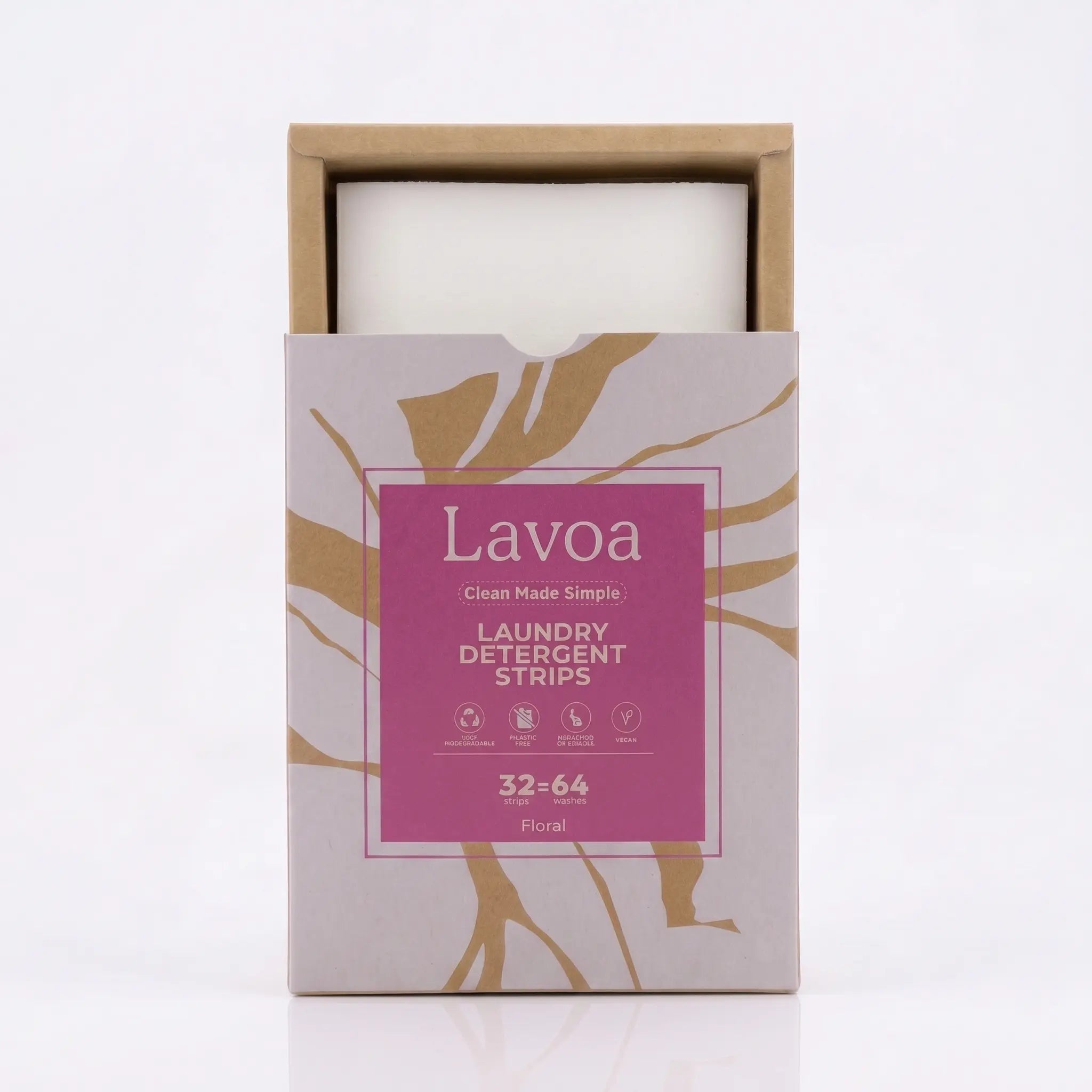
A laundry strip dissolves completely in water — but where does that stuff go afterward? The answer is PVA, and it is less complicated than the name suggests.
What is PVA?
PVA stands for Polyvinyl Alcohol — a water-soluble polymer that has been used in all kinds of applications for decades. You probably know it without realizing it: the thin coating around dishwasher tablets, dissolvable medical sutures, and some eye drops all contain PVA.
What is special about PVA is that it is designed to break down when it comes into contact with water. Not into smaller pieces of plastic, but completely. It dissolves into a liquid that is further broken down by microorganisms in soil and water.
PVA is not plastic in the traditional sense. It behaves differently, dissolves differently, and leaves no microplastics behind.
What is the difference from ordinary plastic?
Ordinary plastic — think of a laundry detergent bottle — is hydrophobic: it repels water and barely breaks down. In nature, this takes hundreds of years. PVA is the opposite: it is hydrophilic (attracts water) and biodegradable under the right conditions.
PVA
- Dissolves in water
- Biodegradable
- No microplastics
- Broken down by bacteria
Ordinary plastic
- Repels water
- Barely biodegradable
- Fragments into microplastics
- Persists for centuries
Is PVA in Lavoa's laundry strips?
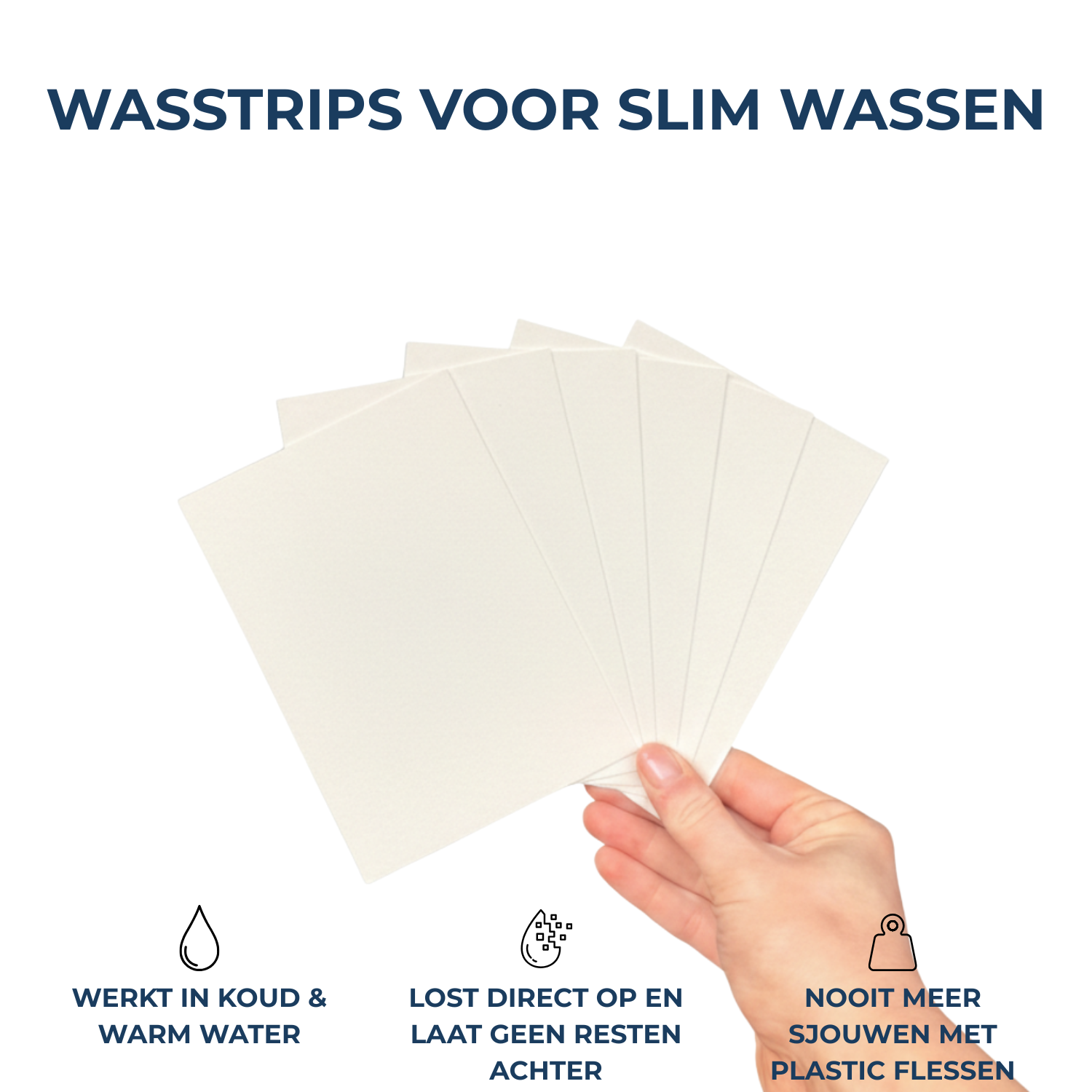
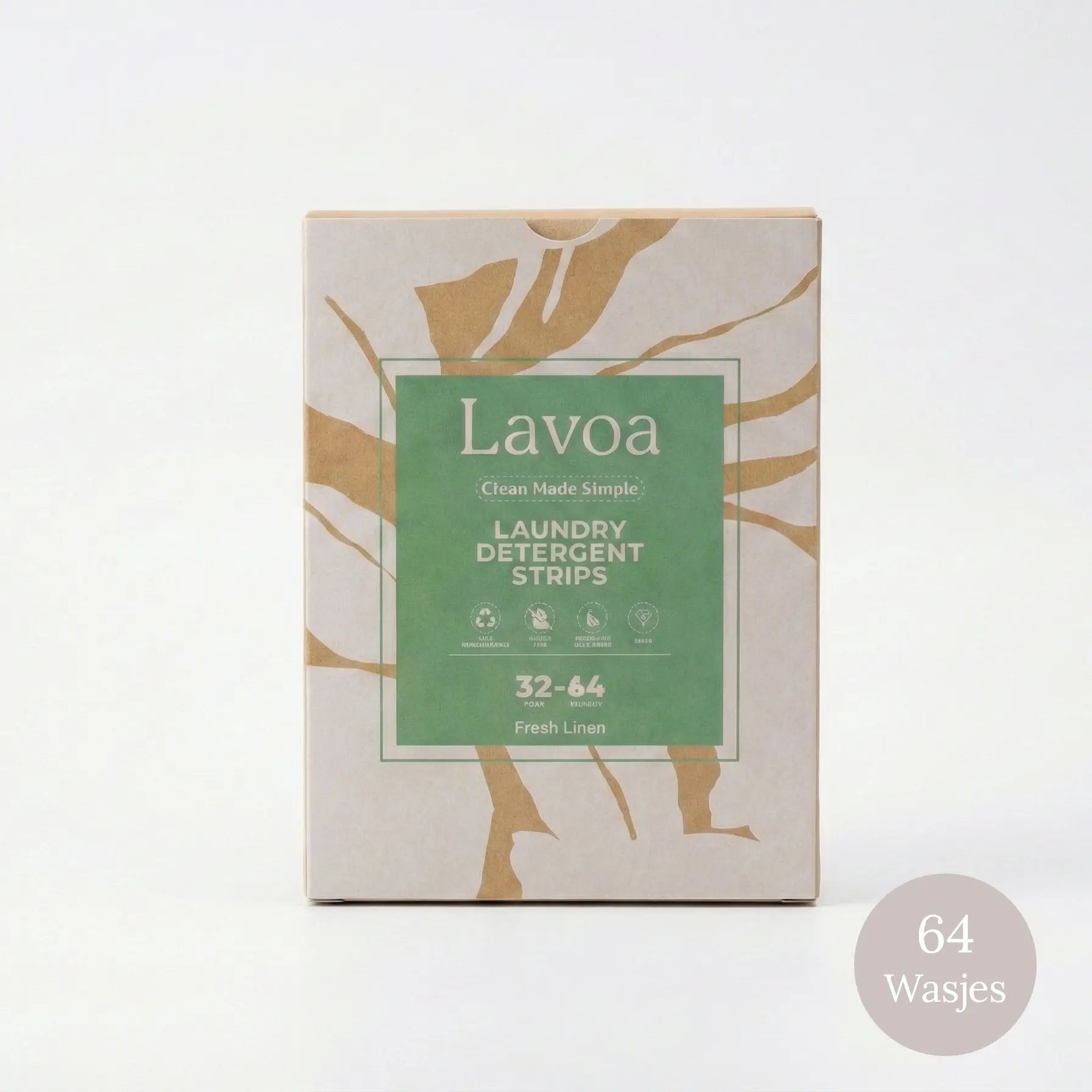
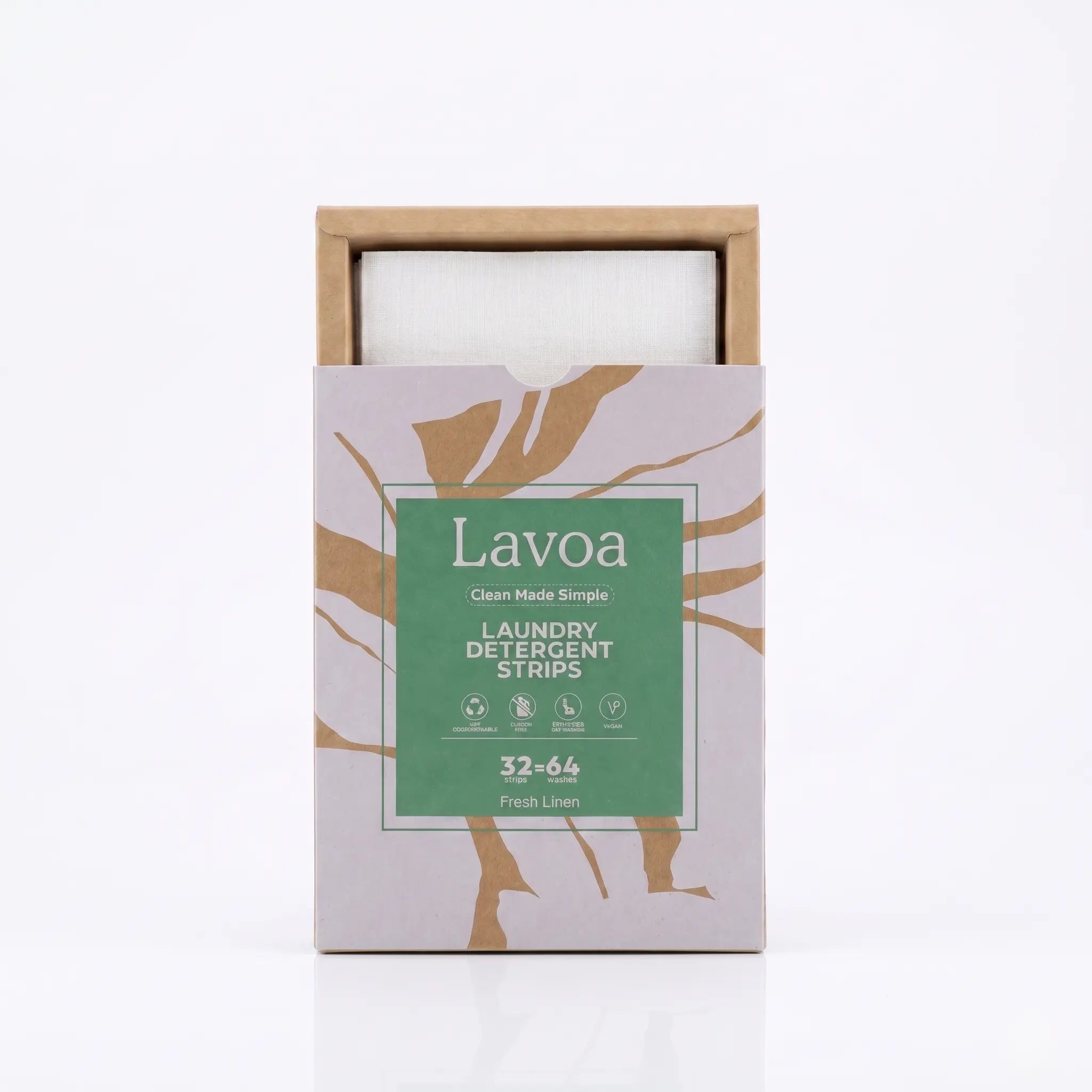
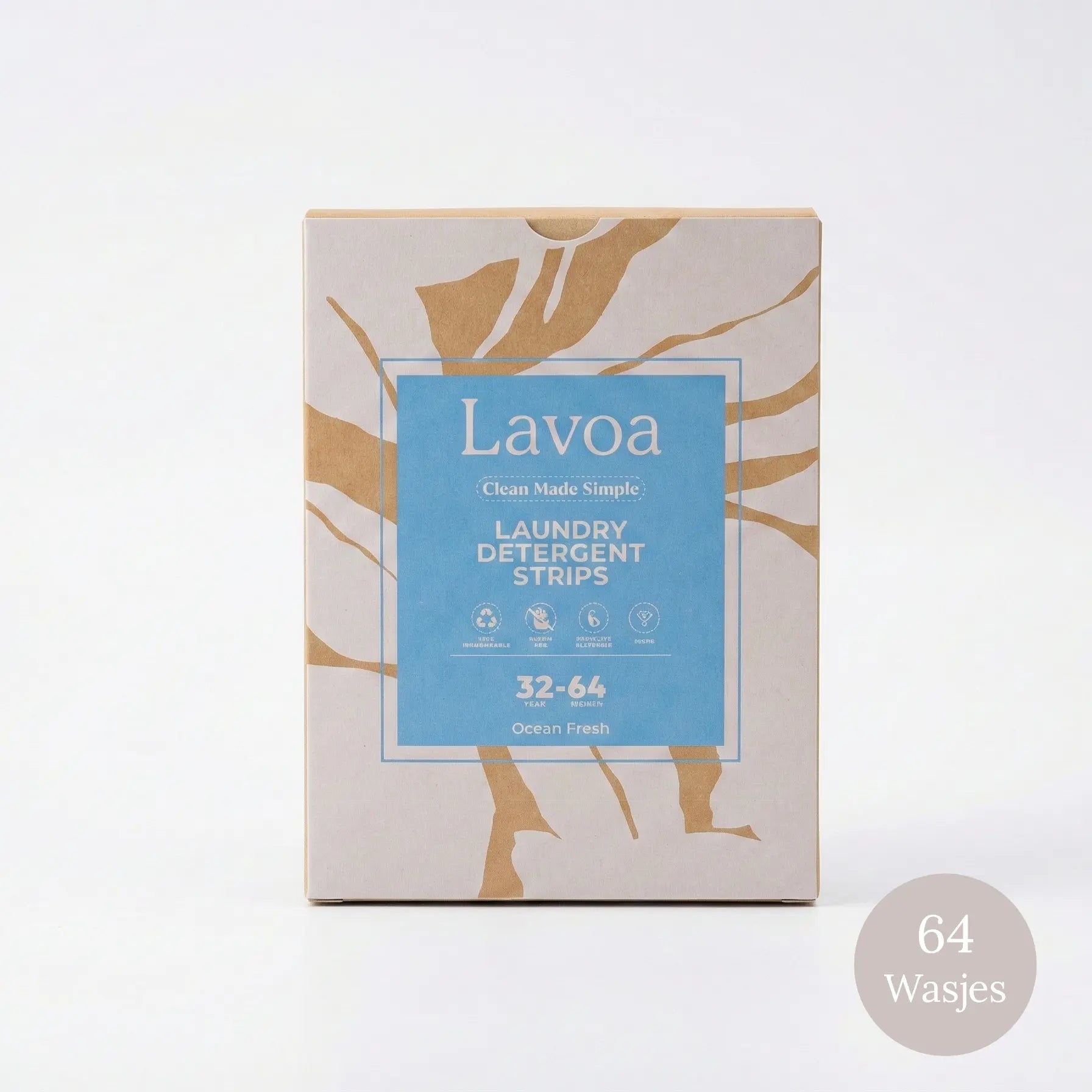
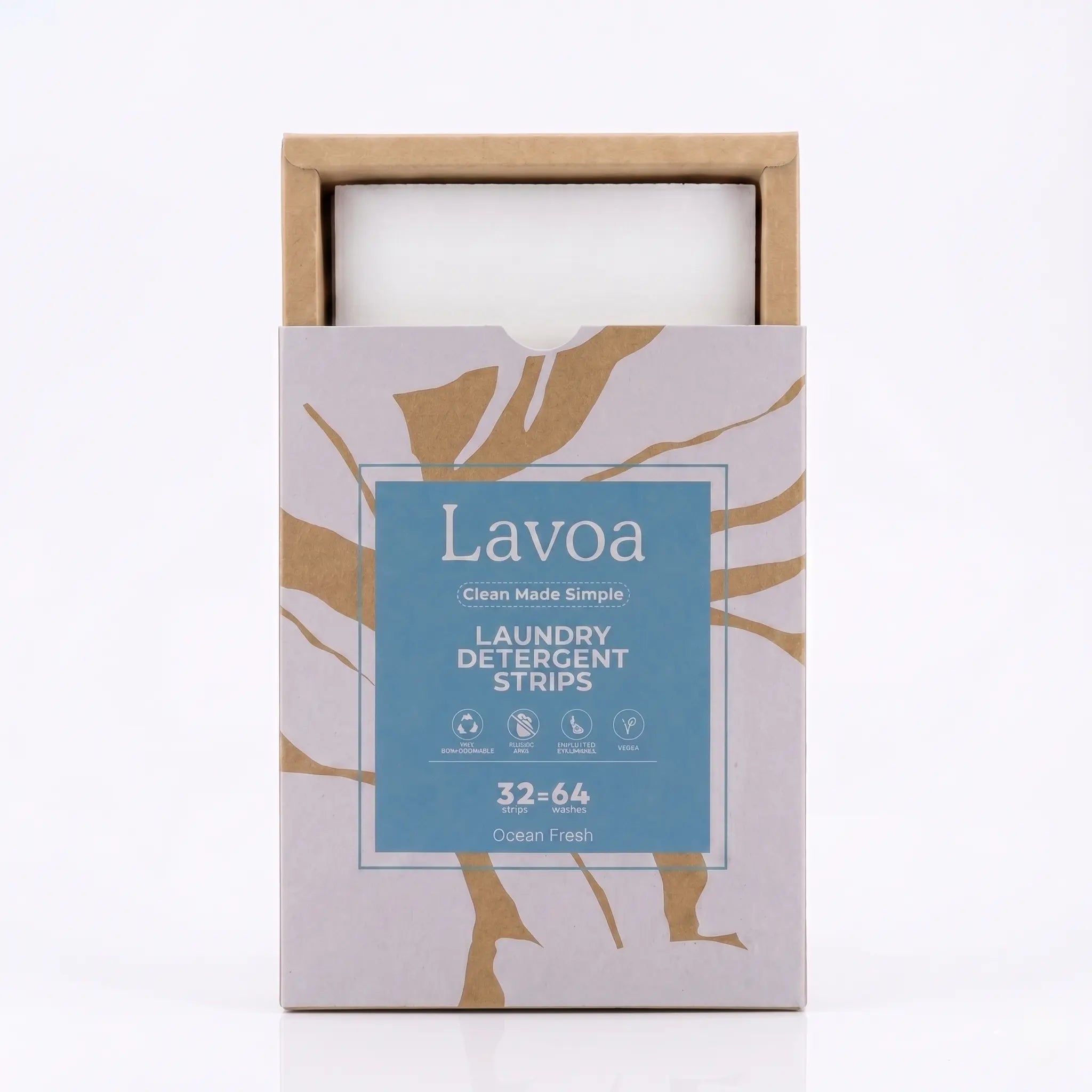
Yes. PVA is the carrier of the laundry strip — the material that keeps all the active ingredients (surfactants, enzymes, fragrance components) neatly bound together in a thin sheet. Without PVA, you would have no strip, just loose powder.
As soon as the strip enters the drum, the PVA dissolves in the wash water. The active ingredients are released and do their job. What reaches the wastewater treatment plant through the drain is an aqueous PVA solution — not plastic particles.
Is PVA safe?
PVA has been assessed as safe for use in consumer products by several international authorities. It has been used for decades in food packaging, pharmaceutical products, and cosmetics.
For the environment, PVA is broken down to a large extent in wastewater treatment plants by bacteria that convert it into water and CO₂. PVA does not accumulate in the food chain as conventional microplastics do.
- No proven toxicity to humans or animals under normal exposure
- Does not accumulate in the food chain
- Does not form microplastics when it breaks down
- Used for decades in medical and food applications
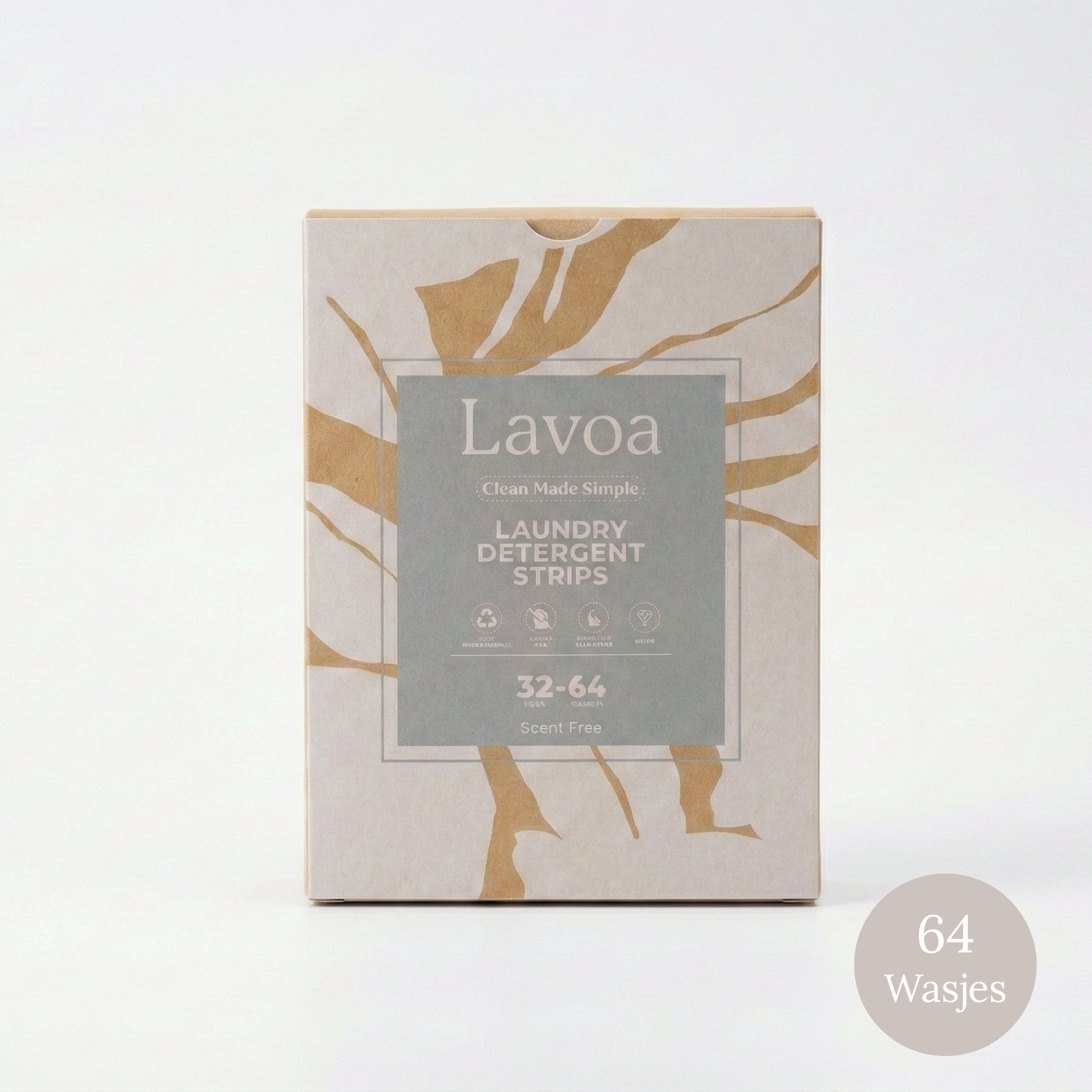
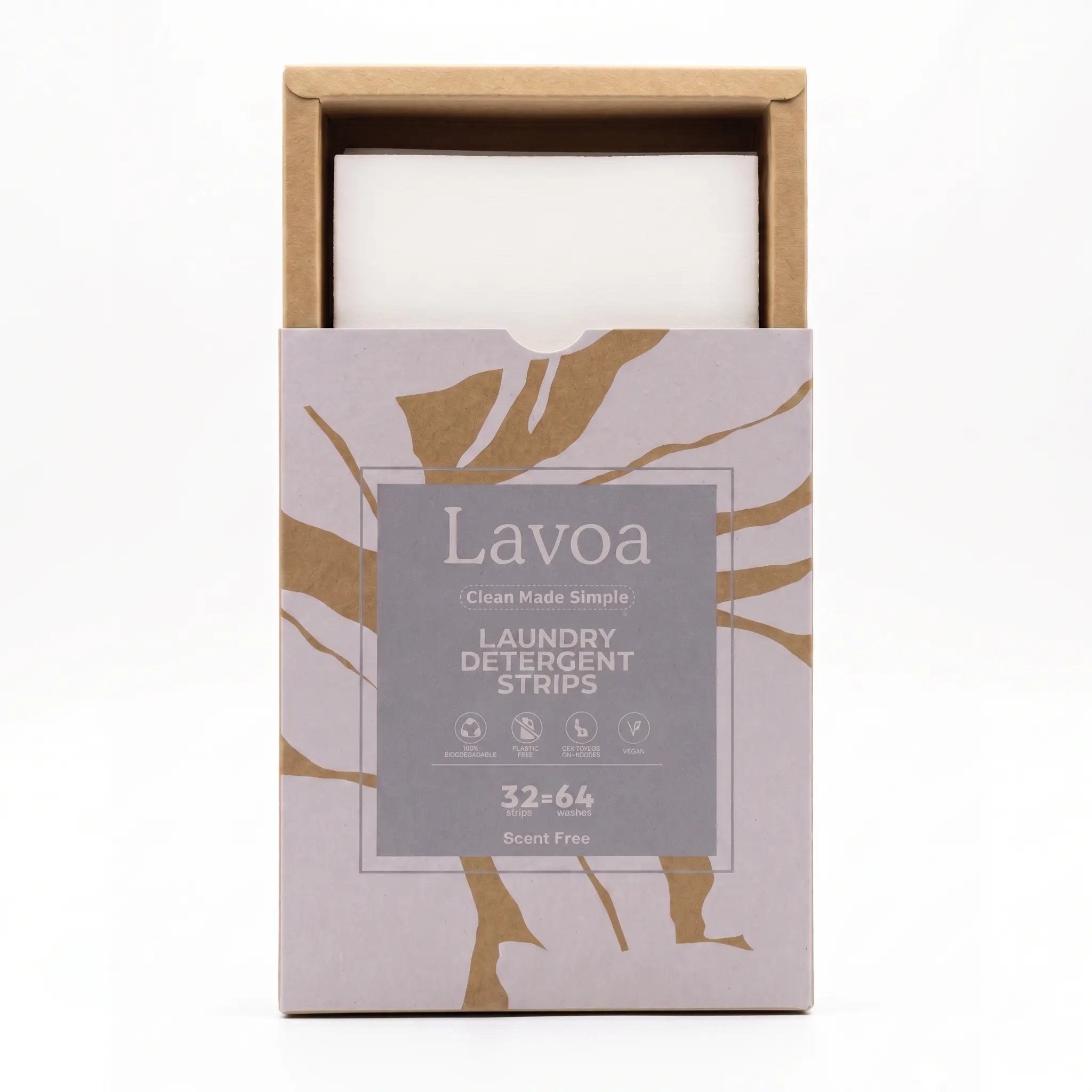
Concerned about sensitive skin or allergies? The Lavoa Fragrance-Free Laundry Strip contains no fragrances and is suitable for most sensitive skin types.
Why laundry strips instead of a bottle?
A standard laundry detergent bottle consists of 60 to 80 percent water. That water is packaged in plastic, loaded onto a truck, and delivered to your home. The laundry strip does the same cleaning work — without the water, without the bottle.
PVA makes this possible: it is lightweight, compact, and stable enough to carry the active ingredients without additional packaging. That is why a strip fits through the letterbox while a bottle does not.
Frequently asked questions about PVA in laundry strips
What exactly is PVA?
PVA stands for Polyvinyl Alcohol — a water-soluble polymer that dissolves completely on contact with water. It has been used for decades in dishwasher tablets, medical sutures, and cosmetics. It is not plastic in the traditional sense and does not form microplastics when it breaks down.
Is PVA the same as plastic?
Technically, PVA is a polymer, but it behaves fundamentally differently from conventional plastic. Ordinary plastic repels water and barely breaks down. PVA attracts water, dissolves in it, and is biodegraded by bacteria. It does not fragment into microplastics.
Is PVA safe for the environment?
PVA is largely broken down by bacteria in wastewater treatment plants. It does not accumulate in the food chain and does not form microplastics. It is not a perfectly neutral material — breakdown depends on the treatment plant — but it performs considerably better than conventional plastic.
Do all laundry strips contain PVA?
Yes, most laundry strips on the market use PVA as the carrier material. It is the most widely used and best-tested solution for water-soluble strips. The alternatives are scarce and less proven in consumer products.
Can I be allergic to PVA?
PVA allergies are rare. The material has been used safely in medical products and cosmetics for decades. If you have sensitive skin, choose the Lavoa Fragrance-Free Laundry Strip — it contains no fragrances, which are more often the cause of skin reactions.
Try it yourself for €3.95
With the trial pack, you can do a few washes — enough to find out whether laundry strips are right for you.
View the laundry strips →