You take your favorite sweater out of the wash and it no longer fits. Shrinkage is by far the most common type of laundry damage — and almost always preventable by using a different temperature or drying method.
Why do clothes shrink?
Shrinkage has one main cause: heat. Fibers — especially those of wool, cotton, and linen — are naturally under tension during fabric production. Heat relaxes that tension, causing the fibers to shrink back to their natural resting state. Once shrunken, the process is difficult or impossible to reverse.
Friction accelerates the process. The combination of heat and mechanical stress in a washing machine or tumble dryer is therefore the riskiest. A sweater washed at 30°C but then put in the tumble dryer on a high setting will still shrink.
By fabric type: how susceptible is it?
Very prone to shrinkage
- Wool and cashmere
- Cotton (especially during the first wash)
- Linen
- Viscose and rayon
- Bamboo
Not very prone to shrinkage
- Polyester
- Nylon
- Elastane
- Acrylic
- Polyester-cotton blend (less than pure cotton)
Wool is the most shrink-prone because the fibers not only shrink but also felt under heat and friction — an irreversible process in which the fibers start sticking together.
The three moments when shrinkage occurs
1. During washing
Too high a temperature is the most common cause. Cotton shrinks noticeably at temperatures above 40°C, while wool can shrink at 30°C on a normal cycle. The wool cycle on your machine is designed to prevent this: low temperature, minimal drum movement.
2. In the tumble dryer
The tumble dryer is more dangerous than the washing machine when it comes to shrinkage. The hot air combined with the tumbling action affects the fibers from all sides. Cotton can shrink by one or two sizes in a single tumble-dryer cycle on a high setting. Always use a low setting or hang clothes up to dry.
3. When drying on the clothesline
Wet wool stretches under its own weight when you hang it up — and then dries in its stretched shape. That is the opposite of shrinking but just as troublesome. Always dry wool and other heavy knitted fabrics flat on a towel or a flat drying rack.
How to prevent shrinkage by fabric type
Cotton
Cotton shrinks the most during the first few washes — after that, it stabilizes. Wash new cotton clothes in cold water or at a maximum of 30°C the first time. After that, 40°C is safe in most cases. Tumble-dry on a low setting or hang to dry.
Wool and cashmere
Wool cycle at 30°C or cold, minimal spin. Dry flat. Never tumble-dry. Never hang while wet. These are not suggestions — with wool, one incorrect wash is enough to cause permanent damage.
Linen
Maximum 40°C, low spin speed, hang on a clothes hanger immediately after washing. Linen dries quickly and smooths out when you hang it up straight away — ironing is barely needed afterward.
Viscose and rayon
Delicate cycle at 30°C or cold, no spin or a very low spin, dry flat. Viscose becomes weaker when wet and stretches easily — handle it with care.
- Wash at the lowest possible temperature for the fabric type
- Use the wool or delicate cycle for sensitive fabrics
- Use the dryer only on a low setting, or not at all
- Always dry wool and viscose flat
- Wash new cotton clothes in cold water the first time
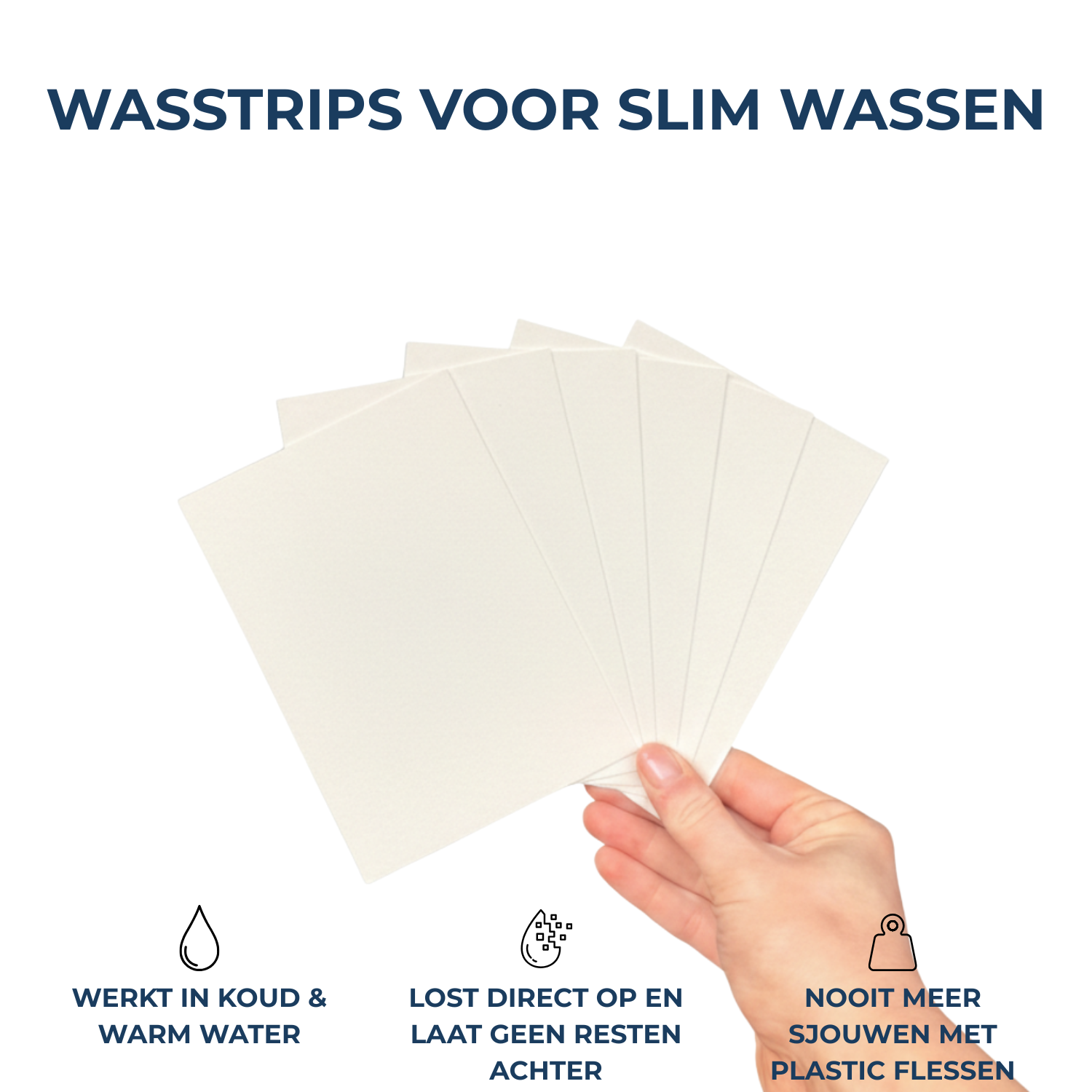
Laundry strips work at all temperatures from 20°C — even in cold water. You do not need to raise the temperature for effective cleaning.
Can shrunken clothes be saved?
Sometimes. For felted wool: no, that is irreversible. For lightly shrunken cotton or linen, you can try this: soak the garment in lukewarm water with a little hair conditioner or shampoo (which relaxes the fibers), gently squeeze it out, and then reshape it by hand while it is still wet. Leave it to dry flat.
It does not always work and never completely, but with slight shrinkage, it is worth trying before throwing the garment away.
Frequently asked questions about clothes shrinking
Why do clothes shrink in the wash?
Shrinkage is caused by heat and friction. Fibers such as cotton and wool are stretched during production — heat relaxes that tension, causing them to shrink. The higher the temperature and the more mechanical stress, the greater the shrinkage. A high dryer setting is more dangerous than the washing machine.
At what temperature does cotton shrink?
Cotton starts to shrink noticeably above 40°C, especially during the first few washes. After that, the shrinkage has largely stabilized. Wash new cotton clothes in cold water or at 30°C the first time. A high dryer setting can still cause shrinkage even after washing at lower temperatures.
Can I stretch shrunken clothes back to their original size?
Sometimes, for slight shrinkage of cotton or linen: soak the garment in lukewarm water with a little hair conditioner, gently squeeze it out, and reshape it while it is still wet. Leave it to dry flat. This does not work for felted wool — that process is irreversible.
Do clothes shrink in the dryer?
Yes, the dryer is often more dangerous than the washing machine. Hot air combined with the tumbling action affects the fibers from all sides. Cotton can shrink by one to two sizes on a high dryer setting. Always use a low setting or hang clothes up to dry.
Does wool always shrink in the washing machine?
Not necessarily — if you use the wool cycle at a maximum of 30°C with minimal spinning. This cycle is designed for delicate fabrics: little drum movement and a low temperature. The risk lies in using too high a temperature or a normal cycle. Wool should never go in the dryer.
Can I hang a wool sweater up to dry?
No. Wet wool is heavy and stretches under its own weight when hung — the sweater then dries in a stretched-out shape. Always dry wool flat on a towel or drying rack, laid out in its original shape.
Washing at low temperatures without compromising on cleanliness
Laundry strips work from 20°C — even in cold water. Good for your clothes, good for your wardrobe.
View the laundry strips →