Laundry powder, liquid detergent, capsules, laundry strips - the shelf is full and every brand claims to be the best. What are the real differences, when should you use which, and how much does each wash cost?
How detergent works: the basics
All detergents - regardless of their form - contain three types of active ingredients that work together to clean your laundry.
Surfactants are the backbone of every detergent. They have a water-attracting end and a grease-attracting end, allowing them to loosen dirt and grease from fibers and keep them in the wash water until rinsed away. Without surfactants, detergent would do nothing.
Enzymes break down specific types of stains: proteases for protein stains (blood, grass, eggs), lipases for fats (sauce, sebum), amylases for starch (pasta, rice) and cellulases for lint and dullness in fibers. They work best between 30°C and 50°C - at higher temperatures, they become inactive.
Builders neutralize limescale in the wash water. Hard water reduces the effectiveness of surfactants, so builders ensure that the surfactants can do their job. In laundry powder, sodium carbonate is the classic builder; modern detergents also use EDTA or zeolite.
In addition, most detergents contain optical brighteners (substances that convert UV light into blue light, making whites appear whiter), fragrance and preservatives. The latter two are the main causes of skin irritation in sensitive people.
The five types of detergent compared
Washing powder
Laundry powder is the oldest and still the most widely used form of detergent in the Netherlands. It contains high concentrations of surfactants and builders and is particularly effective at higher temperatures. Powder dissolves best at 40°C or higher - at low temperatures, it can clump and leave residue in the drawer or on dark clothing.
The main advantage of laundry powder is its cleaning power on whites and heavily soiled laundry. Many powders contain sodium perborate or sodium carbonate as a bleaching agent, which is effective against stubborn stains on white clothing. For dark clothing, however, this is a disadvantage.
Advantages
- Cheap per wash
- Strong on white clothing
- Effective at higher temperatures
- Good descaling (builders)
- Long shelf life
Disadvantages
- Dissolves poorly below 30°C
- Clumpy residue on dark clothing
- Drawer can become clogged
- Less suitable for delicates
- Powder can be irritating when inhaled
Liquid detergent
Liquid detergent has overtaken washing powder over the past few decades as the best-selling form. It dissolves immediately in water — even at low temperatures — and works well as a stain treatment when applied directly to the stain before washing.
The biggest disadvantage is the composition itself: 60 to 80 percent of liquid detergent is water. That water does not contribute to cleaning but makes the bottle heavy and expensive per wash. Liquid detergent also contains more preservatives than powder — necessary to keep the liquid form shelf-stable.
Overdosing is common. The measuring cups are large, and the consequence — soap residue in clothes and the machine — is invisible until it causes problems.
Advantages
- Dissolves immediately, even at 30°C
- Good stain treatment
- Suitable for all fabrics
- Widely available
- No dust problems
Disadvantages
- 60–80% water — expensive per gram of active ingredient
- Easy to overdose
- More preservatives
- Heavy and bulky to carry
- Risk of leaks in the cupboard or suitcase
Laundry detergent capsules and pods
Capsules are pre-dosed units of liquid detergent in a dissolvable PVA film. They are popular for their convenience — no measuring, no spills. The dosage is fixed, and that is both an advantage and a disadvantage: you cannot use more or less depending on the load.
Capsules are the most expensive option per wash. They contain the same active ingredients as liquid detergent but at a higher concentration, which partly explains the higher price. With small loads or lightly soiled clothes, you pay for more cleaning power than you need.
One specific concern: capsules are dangerous for small children and pets because of their attractive packaging and concentrated liquid. Always store them out of reach.
Advantages
- No measuring
- No risk of leaks
- Compactly packaged
- Concentrated
Disadvantages
- Most expensive option per wash
- Fixed dosage — no flexibility
- Dangerous for children
- Does not always dissolve in cold washes
- A lot of packaging waste
Laundry detergent sheets and laundry wipes
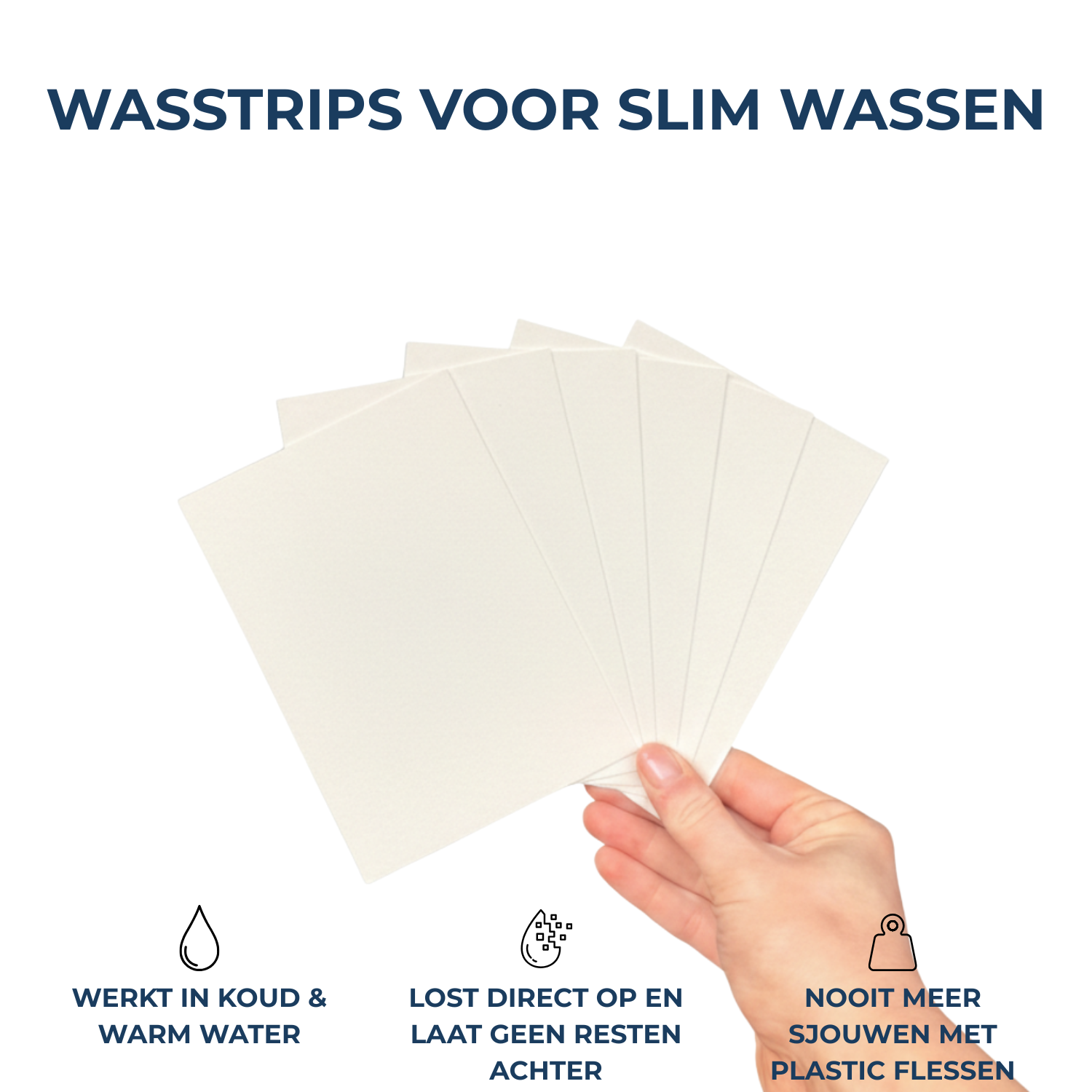
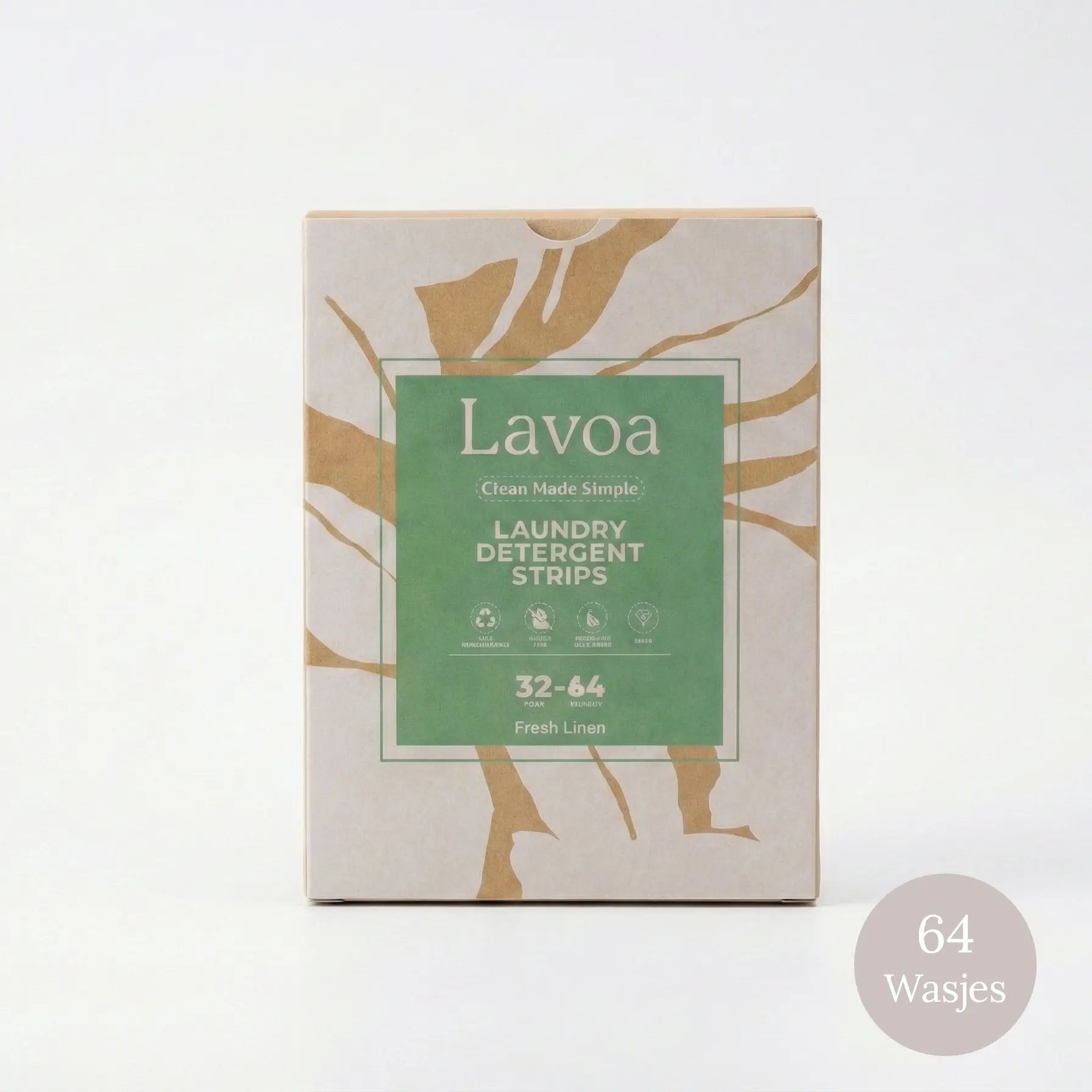
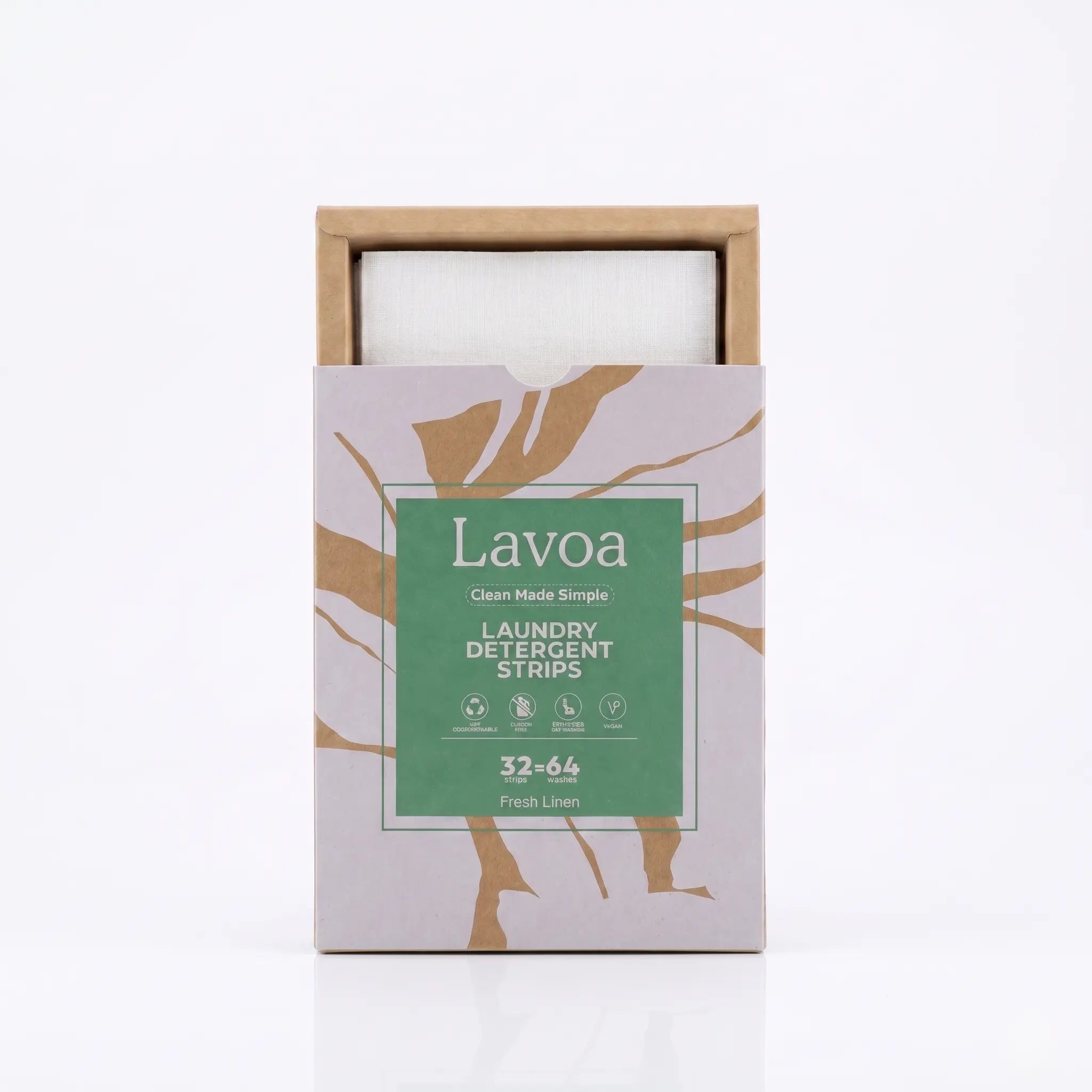
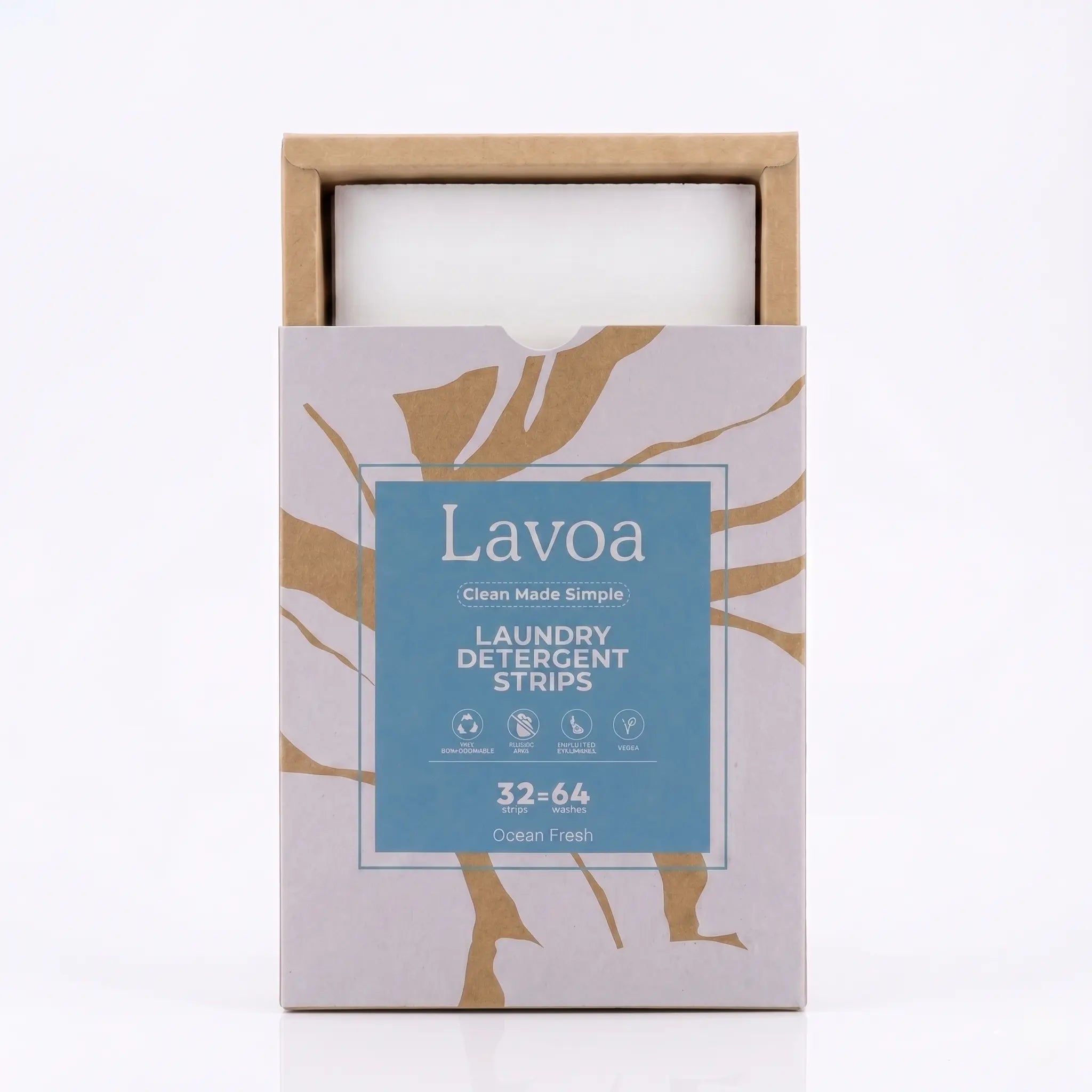
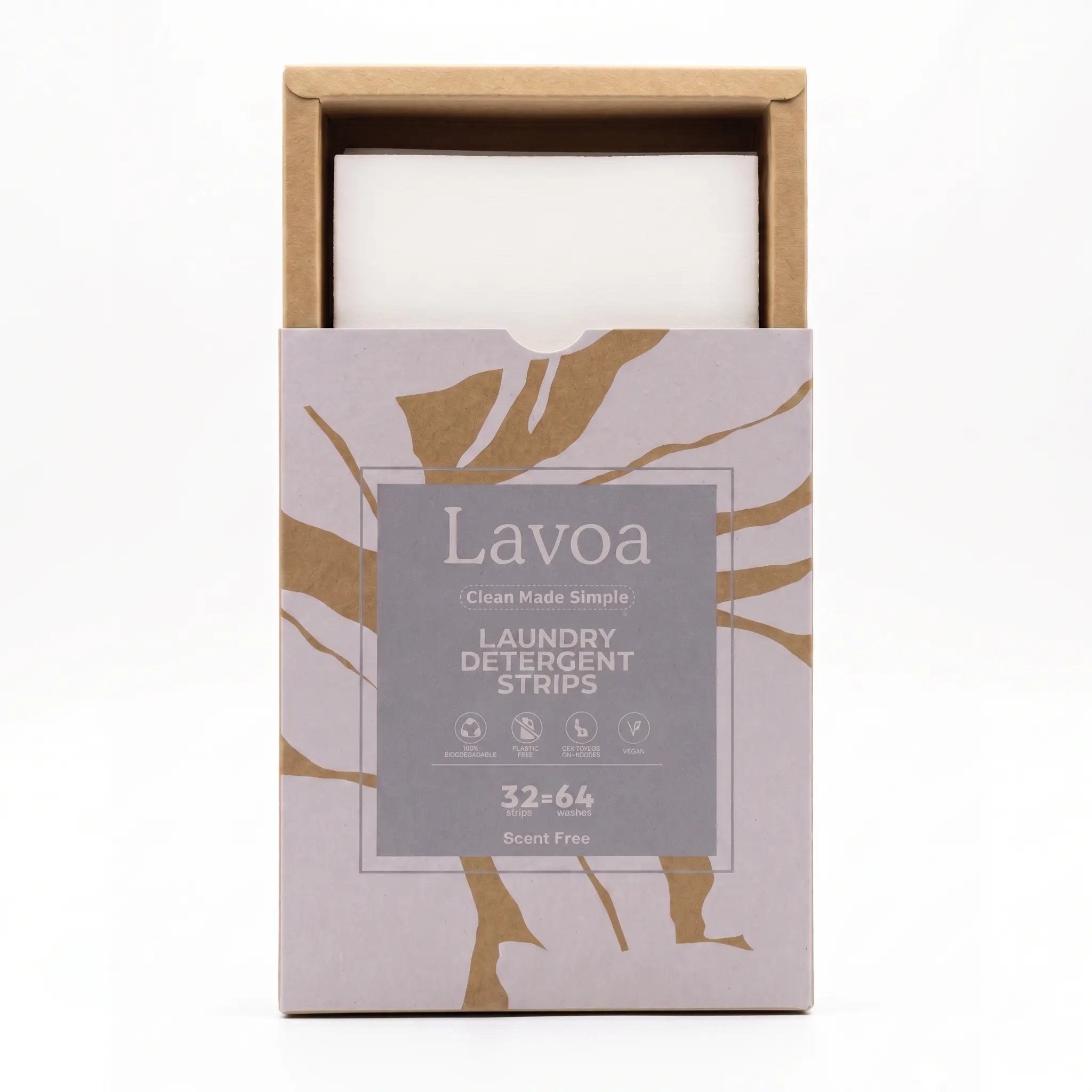
Laundry detergent sheets — also called laundry wipes or detergent wipes — are concentrated, dry sheets that you place directly in the drum. They contain the same active ingredients as liquid detergent, but without water as a carrier. This makes them lightweight, compact, and easy to store.
The biggest practical advantage is the fixed dosage: one sheet per wash for a normal load, half a sheet for a small load. Overdosing is not possible. They also contain no preservatives needed to keep liquid detergents shelf-stable.
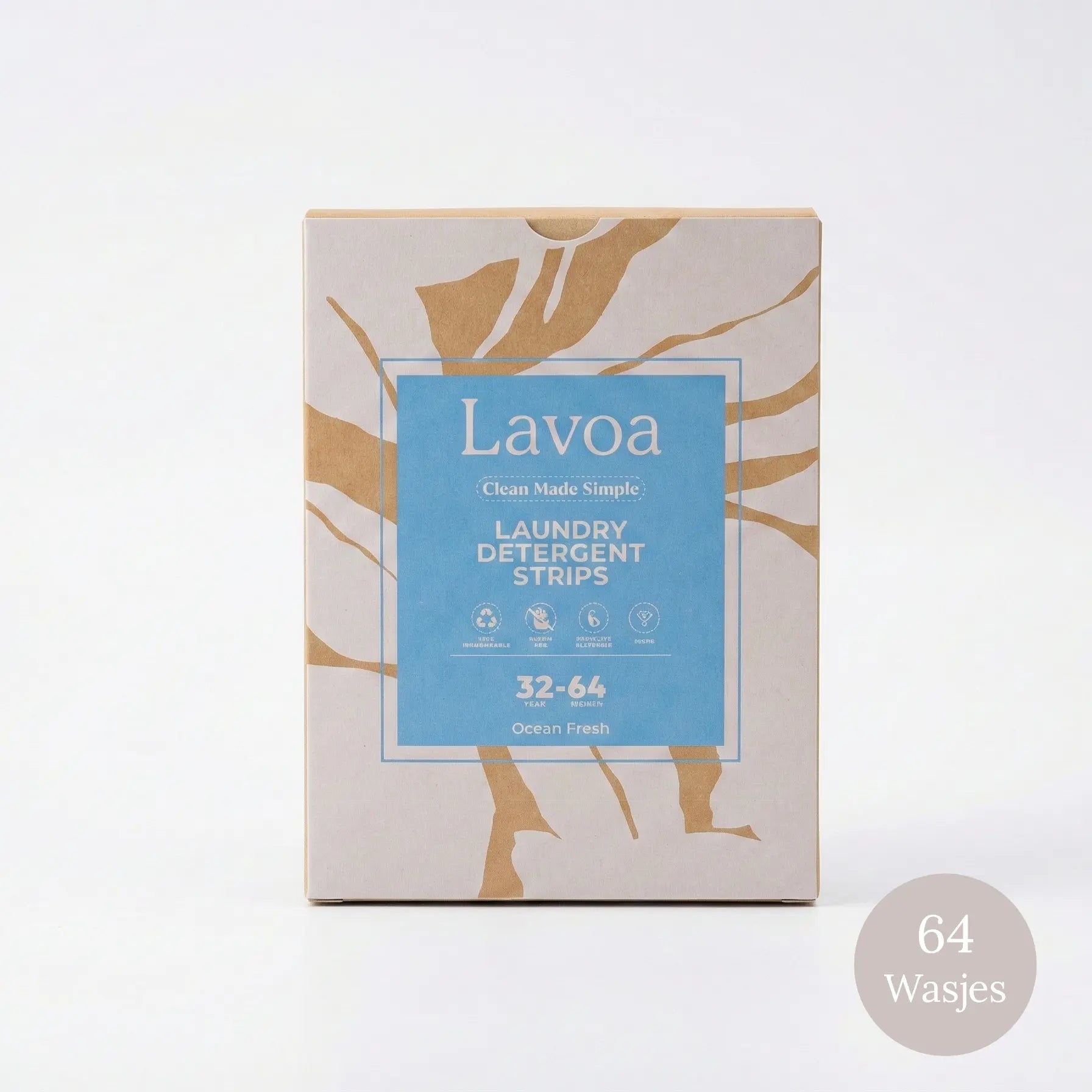
Some laundry detergent sheets - including those from Lavoa - contain no optical brighteners. This makes them better suited to dark clothing than washing powder and many liquid detergents. For extremely heavily soiled laundry, liquid detergent or washing powder is more flexible because you can increase the dosage.
Advantages
- Always the correct dosage
- No preservatives
- Light and compact
- Fits through the letterbox
- Suitable for all temperatures
- No risk of leaks
Disadvantages
- Fixed dosage - less flexible for extremely dirty laundry
- Less widely available in stores
- Fewer options in terms of variants
Comparison of the key points
| Washing powder | Liquid detergent | Capsules | laundry detergent sheets | |
|---|---|---|---|---|
| Price per wash | €0.08-€0.18 | €0.15-€0.35 | €0.25-€0.45 | €0.14-€0.20 |
| Works at 30°C | Fair | Good | Good | Good |
| Works at 60°C+ | Excellent | Good | Good | Good |
| Dosage | Manual | Manual | Solid | Solid |
| Residue with correct use | Possible at low temperatures | Possible when overdosed | Possible in cold water | None |
| Sensitive skin | Fair | Depends on the brand | Fair | Good (fragrance-free variant) |
| Dark clothing | Fair (brighteners) | Depends on the brand | Fair | Good (no brighteners) |
| Compact / for travel | No | No | Reasonable | Excellent |
| Stain treatment | Fair | Good | Not possible | Good (sheet dissolves) |
When should you use which?
| Situation | Best choice |
|---|---|
| White clothing at 60°C | Washing powder or liquid detergent - good cleaning power at high temperatures |
| Dark clothing | Laundry detergent sheets (no optical brighteners) or special detergent for darks |
| Everyday laundry at 30-40°C | Laundry detergent sheets or liquid detergent - dissolve well at low temperatures |
| Sensitive skin or baby clothes | Fragrance-free laundry detergent sheet or hypoallergenic liquid detergent |
| Workwear or heavily soiled laundry | Liquid detergent - flexible dosing |
| On holiday or traveling | Laundry detergent sheets - light, compact, no risk of leaks |
| Hand wash | Laundry detergent sheet dissolved in water or hand-wash detergent |
| Delicate fabrics (wool, silk) | Laundry detergent sheet on a wool cycle or special detergent for delicates |
Sensitive skin: what should you look for?
The most common causes of skin irritation from laundry detergent are fragrance, optical brighteners, and preservatives. If you have sensitive skin or eczema, choose a detergent that is free from all three.
Washing powder contains few preservatives but often does contain optical brighteners and fragrance. Liquid detergents contain more preservatives and varying amounts of fragrance - "hypoallergenic" on the packaging is no guarantee that the product is fragrance-free. Capsules combine most of these substances in a concentrated form.
Fragrance-free laundry detergent sheets contain none of the three and also do not need preservatives - dry sheets are naturally stable. This makes them the most predictable choice for sensitive skin.
Soap residue in clothing is also a common cause of skin irritation - not just the ingredients themselves. Always wash with the correct dosage and select an extra rinse cycle if you experience itching or redness after wearing washed clothes.
Price per wash: what are you really paying?
The price on the packaging says little - the price per wash is what matters. And with detergents that you dose manually, that also depends on how you measure out the detergent.
Powder detergent is cheapest per wash when dosed correctly. But on average, people use 30 to 50 percent too much - making the effective price per wash higher than the packaging suggests. Capsules are the most expensive but always provide the stated dosage. laundry detergent sheets fall somewhere in between in terms of price and always provide the correct dosage without the risk of overdosing.
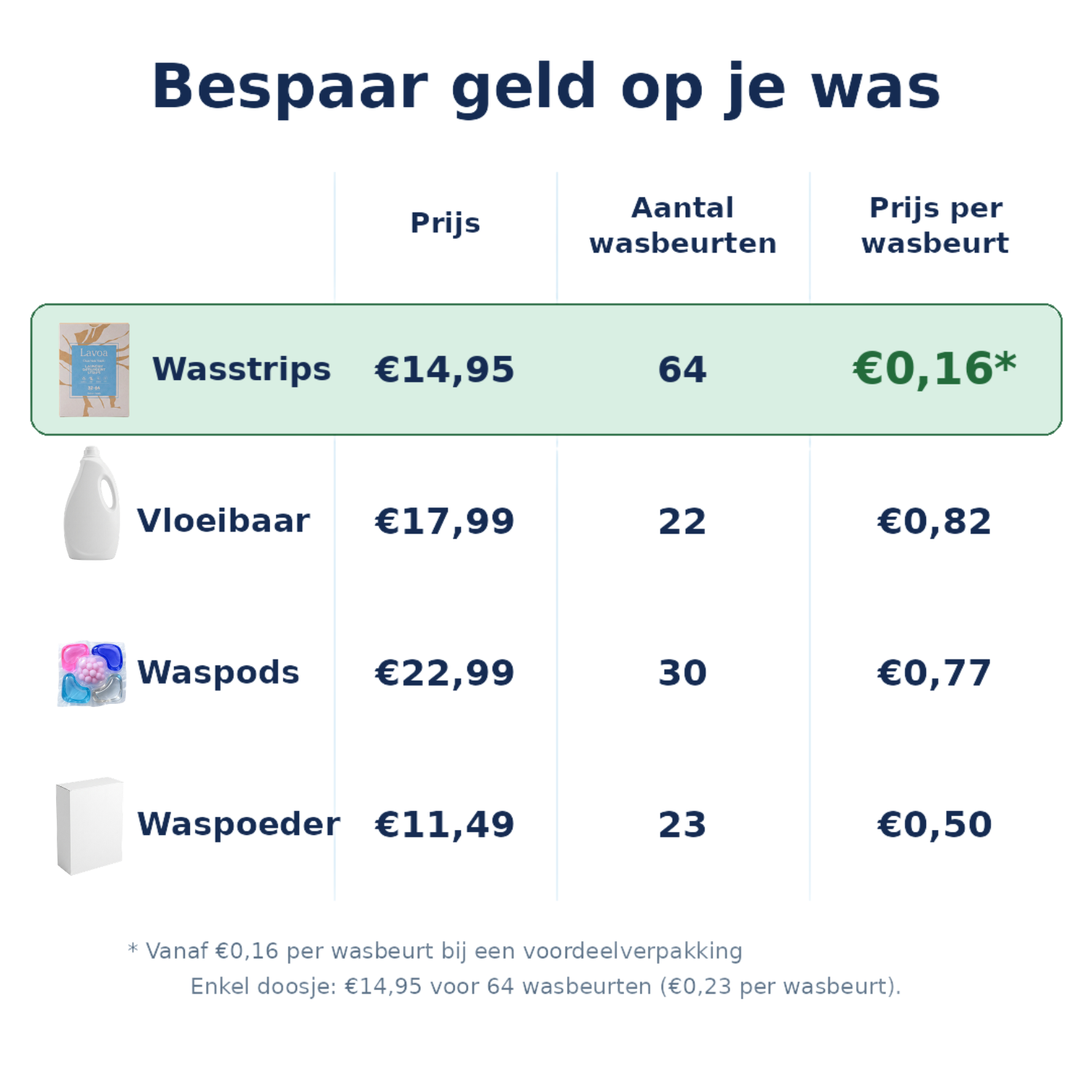
With Lavoa laundry detergent sheets, you can count on €0.16 per wash. That is comparable to economical use of a mid-priced liquid detergent, but without the weight, risk of leakage and tendency to overdose.
What is in laundry detergent sheets?
A frequently asked question, because the ingredient list for laundry detergent sheets looks different from that of liquid detergent. The most common ingredients are polyvinyl alcohol (PVA, the carrier that dissolves in water), sodium dodecylbenzenesulfonate (a surfactant), glycerin (as a plasticizer for the sheet) and enzymes. PVA is biodegradable and has been used in pharmaceutical applications for decades.
laundry detergent sheets contain no water, no water-based preservatives and no fillers. What they contain actively contributes to cleaning.
Frequently asked questions about types of laundry detergent
What is the difference between powder detergent and liquid detergent?
Powder detergent works better at higher temperatures and is more effective on white clothes because of its built-in bleaching components. It is cheaper per wash but dissolves poorly below 30°C and can leave residue on dark clothes. Liquid detergent dissolves immediately at any temperature and works well as a stain treatment, but consists of 60-80% water - so you are partly paying for the carrier. Both contain the same types of active ingredients.
Are laundry detergent sheets as effective as regular detergent?
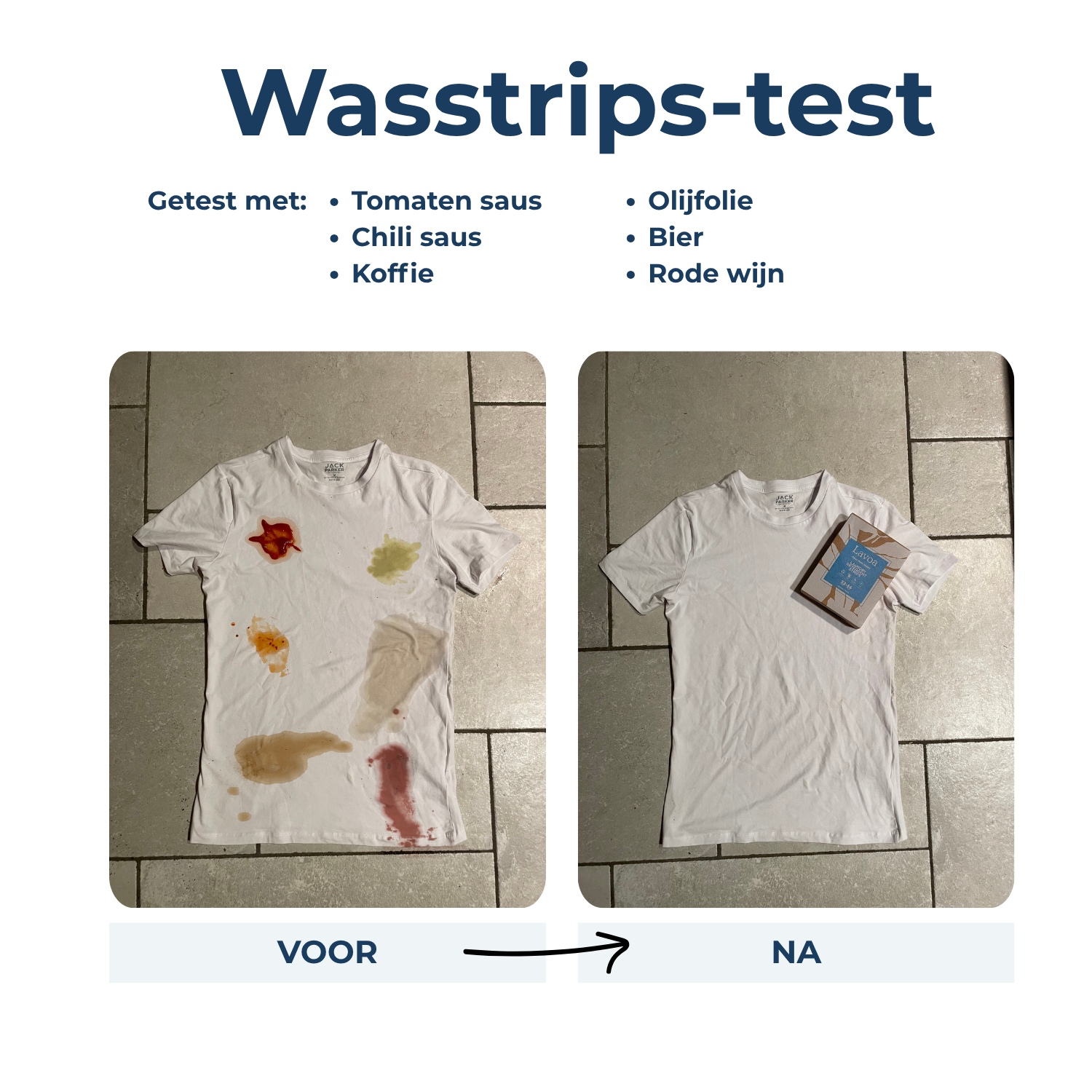
Yes, for everyday laundry with normally soiled clothes. laundry detergent sheets contain the same types of surfactants and enzymes as liquid detergent. The difference lies in the carrier - laundry detergent sheets are dry and concentrated, while liquid detergent consists largely of water. For extremely heavily soiled laundry, liquid detergent offers more flexibility because you can increase the dosage.
Which laundry detergent is cheapest per wash?
Washing powder at the correct dosage. Store-brand washing powder starts at €0.08 per wash. Liquid detergent costs €0.15–€0.35, depending on the brand and dosage. Laundry detergent sheets cost €0.14–€0.20. Capsules are the most expensive at €0.25–€0.45. Note: with manually dosed detergents, overdosing increases the effective cost per wash — people use an average of 30–50% more than necessary.
Which detergent is best for sensitive skin?
A fragrance-free, hypoallergenic detergent without optical brighteners or preservatives. Fragrance-free laundry detergent sheets meet all three criteria — they contain no fragrance, no optical brighteners, and require no preservatives. Fragrance-free liquid detergent is also a good choice, but check that it is also free of optical brighteners. "Hypoallergenic" on the packaging is no guarantee that it is fragrance-free.
Which detergent should I use for dark clothing?
Choose a detergent without optical brighteners — they give dark clothing a gray or bluish cast. Washing powder almost always contains optical brighteners and is therefore less suitable for dark clothing. Laundry detergent sheets without optical brighteners are a good choice. Some liquid detergent brands have a special "dark" or "black" version without brighteners.
What are laundry detergent capsules, and are they better than liquid detergent?
Capsules are pre-dosed units of liquid detergent in a dissolvable film. Convenience is the biggest advantage — no measuring, no leaks. They are the most expensive option per wash and offer no flexibility in dosing. With small loads or lightly soiled clothing, you pay for more cleaning power than necessary. They also dissolve less effectively when washing in cold water.
Does washing powder also work at 30°C?
Moderately. Washing powder dissolves best at 40°C or higher. At 30°C, it can clump and leave residue in the drawer or on dark clothing. If you consistently wash at 30°C, liquid detergent or laundry detergent sheets are a better choice — they dissolve immediately at any temperature.
What is PVA in laundry detergent sheets, and is it safe?
PVA stands for polyvinyl alcohol — the carrier that gives the sheet its solid form and dissolves completely in water. PVA has been used for decades in pharmaceutical applications such as soluble capsules for medicines. It is biodegradable and has been assessed as safe under European regulations. Laundry detergent sheets contain PVA as a functional carrier, not as an active ingredient.
Laundry detergent sheets: concentrated, always correctly dosed
No water, no preservatives, no overdosing. Available in four scents — including fragrance-free for sensitive skin.
View the laundry detergent sheets →