Your washing machine cleans your clothes — but who cleans the machine? A dirty machine leads to dirty laundry, a musty smell, and technical problems over time. Fortunately, maintenance is less work than you might think.
Why you should clean your washing machine regularly
Small amounts of dirt, soap residue, skin flakes, and limescale remain in the machine after every wash. They gradually build up in the rubber door seal, drum, detergent drawer, and pipes. Bacteria and mold thrive in this layer — and that is the source of the musty smell your clothes pick up after washing.
A dirty machine also works less efficiently. Limescale buildup on the heating elements uses more energy and can eventually lead to malfunctions.
Symptoms of a dirty machine
- Laundry smells musty after washing
- Gray residue on the rubber seal
- Black spots around the door seal
- Slimy residue in the drawer
- Machine smells musty when opened
Causes
- Too much detergent
- Liquid fabric softener
- Always wash at a low temperature
- Leave the door closed after washing
- Never clean the drawer
Cleaning your washing machine: step by step
-
Clean the rubber seal Pull back the rubber door seal — this is where most dirt hides. Wipe it thoroughly with a cloth soaked in a mixture of water and white vinegar. Treat black mold spots with a little baking soda on the cloth. Then wipe the inside of the door as well.
-
Clean the detergent drawer Pull out the drawer — most machines have a small release button. Rinse it under warm water and use an old toothbrush for the corners. The compartments for prewash and fabric softener are often the dirtiest. Let the drawer dry before putting it back.
-
Clean the lint filter The lint filter is usually at the bottom of the machine behind a small flap. Place a shallow container or towel underneath — water will come out. Unscrew the filter, rinse it clean under the tap, and put it back. Do this every one to two months.
-
Run a cleaning cycle Empty drum, highest temperature (90°C or 95°C), a splash of white vinegar or washing machine cleaner in the drum. This dissolves grease buildup, soap residue and limescale in the pipes. Do not add detergent — it produces too much foam in an empty machine.
-
Leave the door open After every wash — not just after cleaning. Leaving the door slightly ajar allows the drum to dry and prevents mould growth. This is the easiest preventive measure there is.
A monthly cleaning cycle at 90°C keeps limescale, grease buildup and mould under control over time — even if you wash at 30°C every day.
How often should you clean your washing machine?
- Rubber seal and door: wipe briefly after use each week
- Detergent drawer: rinse monthly
- Lint filter: check every one to two months
- Cleaning cycle at 90°C: monthly
- Complete cleaning, including all components: every quarter
Cleaning a washing machine with vinegar, baking soda or washing machine cleaner?
White vinegar
Effective for removing limescale and soap residue. Inexpensive and widely available. Use it on the rubber seal, the detergent drawer and as an addition to the cleaning cycle. Do not use it together with detergent — the combination neutralises each other.
Baking soda
Good for removing odours and light buildup. Adding a tablespoon to the drum during the cleaning cycle helps with musty smells. It can also be used to scrub the rubber seal.
Washing machine cleaner
Commercial washing machine cleaners such as Calgon or Dr. Beckmann are more effective against heavy limescale and grease buildup. Follow the instructions on the packaging — usually one tablet or sachet during an empty cleaning cycle at 90°C.
Prevention is easier than cleaning
Most of the dirt in a washing machine comes from using too much detergent and liquid fabric softener. Both leave behind grease and residue that accumulates. Using less detergent — or switching to laundry strips that contain no grease and dissolve completely — significantly reduces buildup.
Also stop using fabric softener if you regularly have problems with a musty-smelling machine. Fabric softener is the biggest contributor to grease buildup in the pipes.
Frequently asked questions about cleaning your washing machine
How often should I clean my washing machine?
A 90°C cleaning cycle once a month is ideal. Wiping the rubber seal and door after use takes little time and helps prevent mold growth. Check and clean the lint filter every one to two months. A thorough cleaning of all components once a quarter is a good guideline.
Can I clean my washing machine with vinegar?
Yes. White vinegar dissolves limescale and soap residue and is safe for most machines. Use it on the rubber seal and drawer, or add a splash to the 90°C cleaning cycle. Do not use vinegar together with detergent — they neutralize each other. Using large amounts of vinegar too frequently can eventually damage rubber seals.
Why does my washing machine smell musty?
A musty smell is caused by bacteria and mold in a layer of soap residue, grease, and skin flakes — also known as biofilm. The most common causes are using too much detergent, using fabric softener, and leaving the door closed after washing. Clean the rubber seal and drawer, and run a 90°C cleaning cycle.
How do I clean my washing machine’s lint filter?
The lint filter is usually at the bottom of the machine behind a small flap. Place a low container or towel underneath — water will come out when you open it. Unscrew the filter, rinse it under the tap, and remove any lint and dirt. Screw it back in and close the flap. Do this every one to two months.
How can I prevent my washing machine from getting dirty quickly?
Three habits make the biggest difference: use less detergent (or laundry strips that dissolve completely), stop using liquid fabric softener, and leave the door slightly open after every wash. Run a 90°C cleaning cycle once a month for maintenance.
Less pollution starts with your detergent
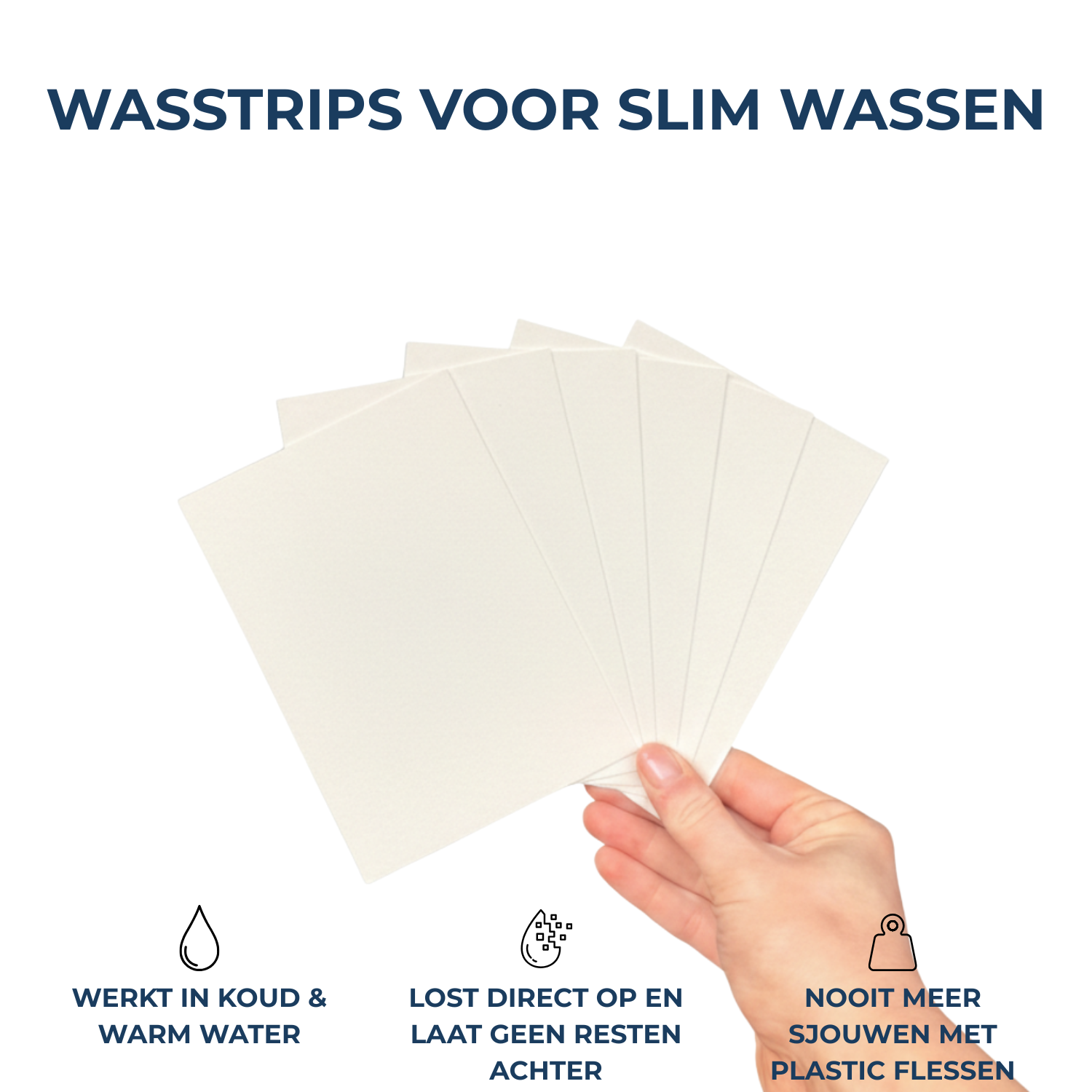
Laundry strips contain no fats, dissolve completely, and ensure the right dosage — the simplest way to prevent grease buildup in your machine.
View the laundry strips →