The label says “hand wash only” — but can you still put the garment in the washing machine? In many cases, yes, if you know which settings to use.
What does the hand-wash symbol actually mean?
The hand-wash symbol — a tub with a hand in it — means that the fabric is sensitive to mechanical stress and heat. The manufacturer advises against machine washing because the standard settings are too harsh for the material.
That does not mean the machine is automatically off limits. It means you need to be careful with the temperature, spin speed and cycle type. Modern washing machines have a hand-wash or wool cycle that offers exactly this: little movement, low temperature and minimal spinning.
Is there a cross through the wash tub? Then the garment must not get wet at all — not even by hand. Dry cleaning is the only option.
Which fabrics can you machine wash despite the hand-wash symbol?
✓ Often machine washable
- Wool (wool cycle, 30°C)
- Cashmere (wool cycle, 30°C)
- Silk (delicate cycle, 30°C)
- Viscose (delicate cycle, 30°C)
- Knitted sweaters (wool cycle)
✗ Hand wash or dry clean only
- Leather and suede
- Clothing with a crossed-out wash tub symbol
- Delicate embroidery or beading
- Glued constructions (some cosplay)
- Vintage clothing without a clear care label
The right settings for hand washing in the machine
The wool or hand-wash cycle on your machine is specifically designed for delicate fabrics. The difference from a normal cycle comes down to three things: less drum rotation, a lower temperature, and a shorter or gentler spin cycle.
- Cycle: wool, hand wash or delicate — depending on your machine
- Temperature: maximum 30°C, preferably cold
- Spin cycle: maximum 600 rpm, preferably lower or switched off
- Detergent: use a small amount, no fabric softener
- Laundry bag: use a mesh laundry bag for extra protection
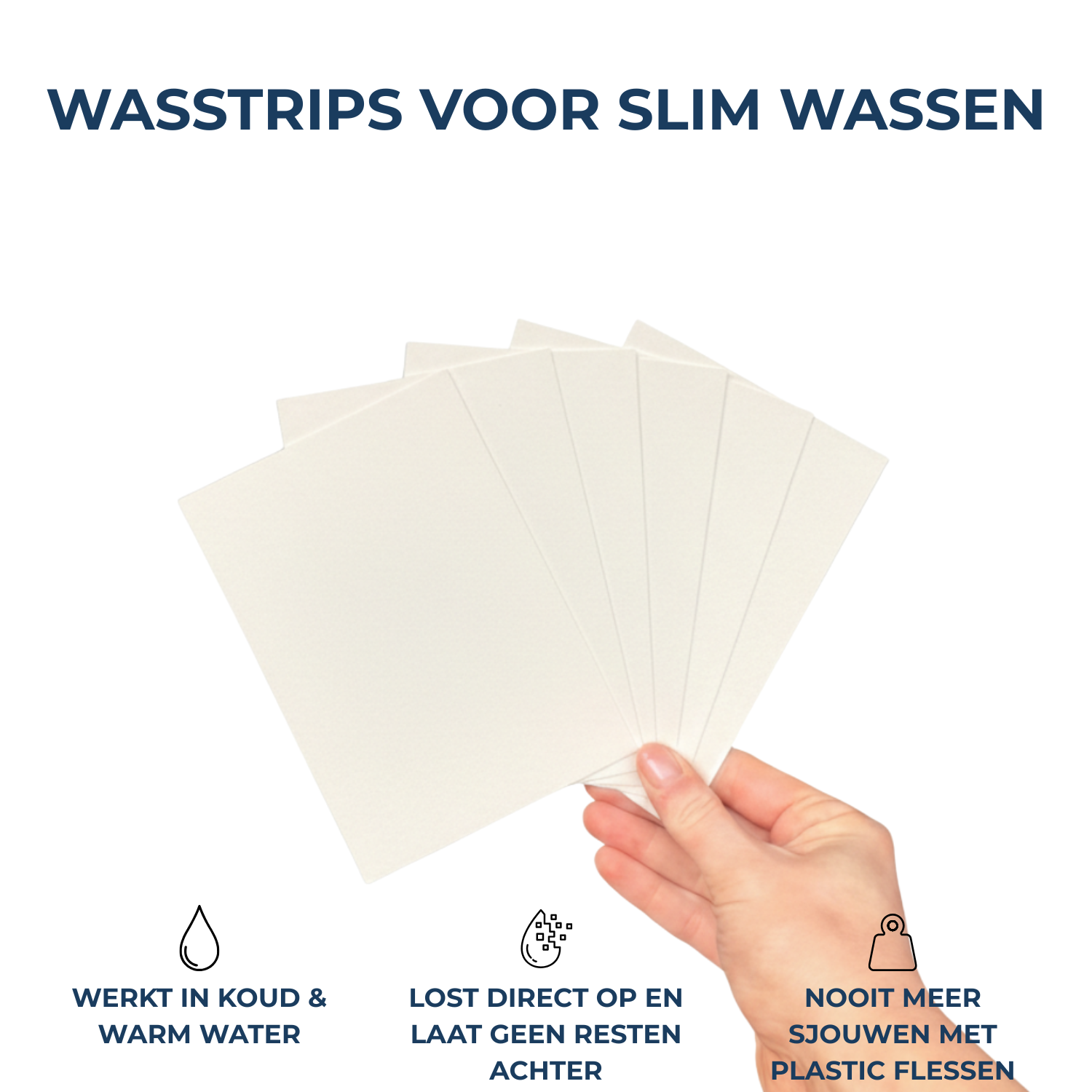
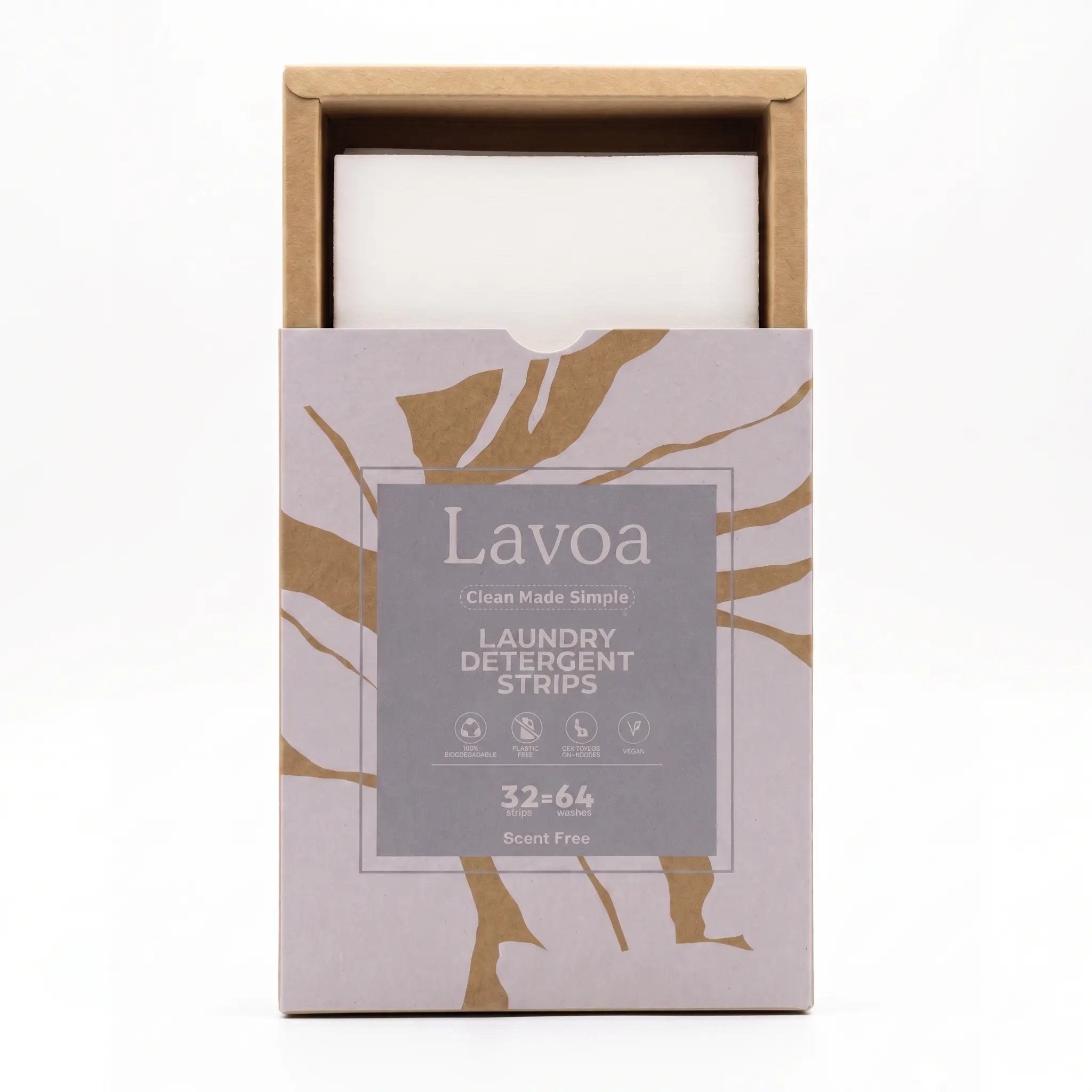
Half a laundry strip is enough for a small load of delicate clothing — no overdosing and no residue in sensitive fibres such as wool or silk.
What works for each fabric
Wool and cashmere
Wool shrinks with heat and mechanical stress — not from water itself. The wool cycle on your machine washes at a low temperature with minimal drum movement. That is gentler than most people think. Use a small amount of detergent and set the spin speed as low as possible or turn it off completely.
Dry flat after washing — never hang. Wool stretches under its own weight once it is wet.
Silk
Silk is sensitive to friction and heat but handles cold water just fine. Use a delicate cycle at 30°C or cold, no spin cycle, gently squeeze out excess water in a towel immediately after washing, and dry flat. When in doubt or for expensive items: hand wash or dry clean.
Viscose
Viscose becomes weaker when wet and stretches easily. Use the delicate programme at a maximum of 30°C, a low spin speed and dry flat. Placing viscose in a laundry bag reduces the risk of deformation.
The laundry bag: a small aid that makes a big difference
A mesh laundry bag protects delicate garments from friction with the drum and other clothing. It is especially useful for silk, lace details, underwired bras and knitted items. The washing around the bag cleans the garment — the bag itself absorbs the mechanical stress.
When should I hand-wash instead?
For expensive or sentimental garments, clothing with fragile details such as beads or embroidery, and vintage items without a clear care label, hand-washing is the safest choice. Dissolve half a laundry strip in a basin of lukewarm water, wash gently and rinse thoroughly with cold water.
Frequently asked questions about hand-washing in the washing machine
Can I put hand-wash garments in the washing machine?
In many cases, yes — if you use the right programme. The wool or hand-wash programme washes at a low temperature with minimal drum movement, similar to hand-washing. Use a maximum of 30°C, a low spin speed and little detergent. Leather, suede and garments with a crossed-out wash tub symbol should not be machine-washed.
Which programme should I use for hand-wash garments?
The wool programme or hand-wash programme — the name varies by brand. This programme washes at a low temperature with little drum movement and a gentle spin cycle. Some machines also have a “delicate” or “fine-wash” programme that does the same.
At what temperature should I machine-wash hand-wash garments?
A maximum of 30°C, preferably cold. Most delicate fabrics, such as wool, silk and viscose, react not to water itself but to heat and mechanical stress. Cold water with a gentle programme is sufficient in most cases.
How can I prevent wool from shrinking in the machine?
Wool shrinks due to heat and friction, not water. Use the wool programme at a maximum of 30°C, set the spin speed as low as possible and dry the garment flat — never hang it up. Wet wool stretches under its own weight. A laundry bag provides extra protection against friction with the drum.
What should I do if my machine doesn’t have a wool programme?
Use the delicate or cold-wash programme. Set the temperature to 30°C or cold, and the spin speed as low as possible. If your machine has no separate setting, choose the shortest and gentlest programme available. When in doubt: hand-wash in a basin of lukewarm water.
Delicate laundry without the hassle
Half a laundry strip in the drum or dissolved in a basin of water — always the right dosage for delicate fabrics.
View the laundry strips →