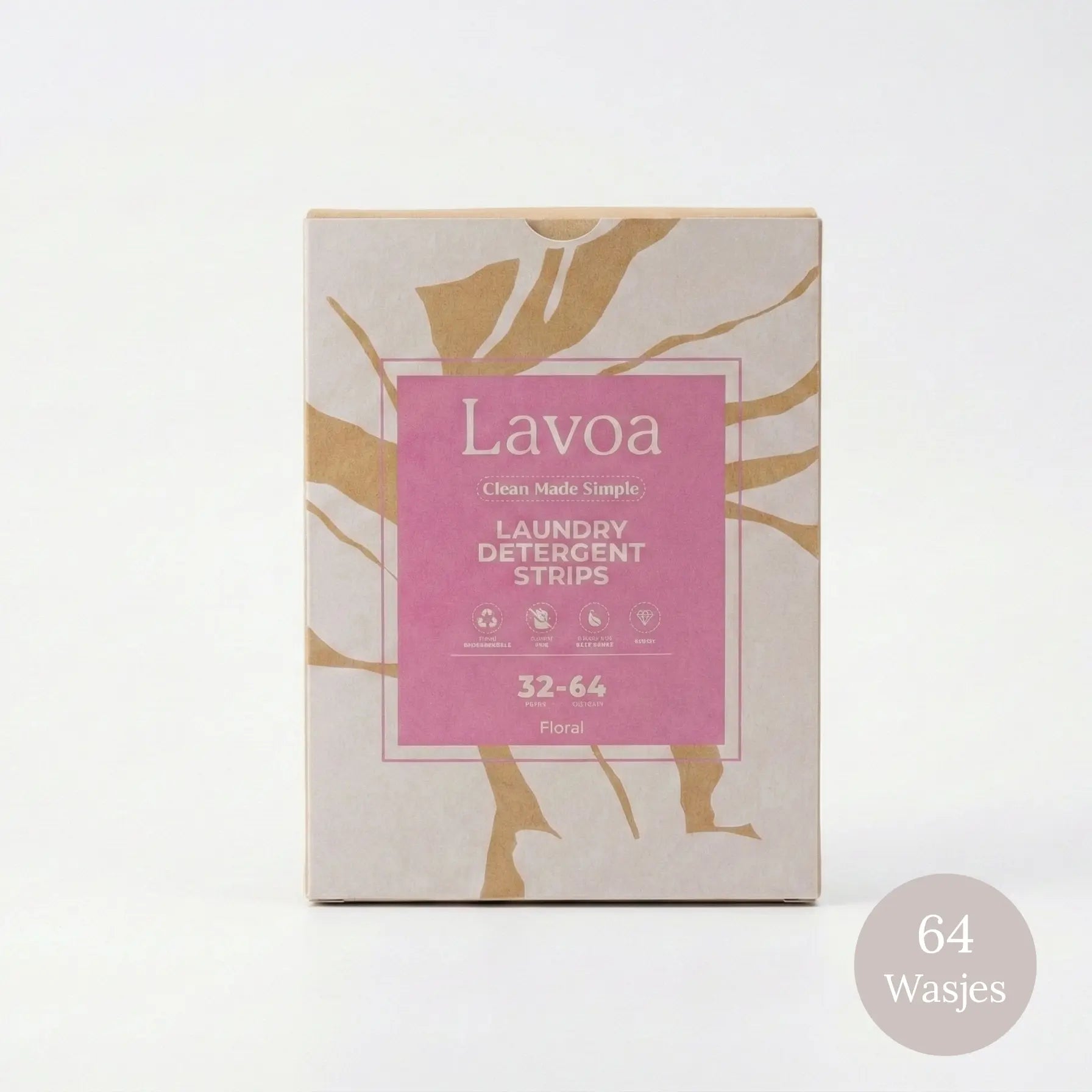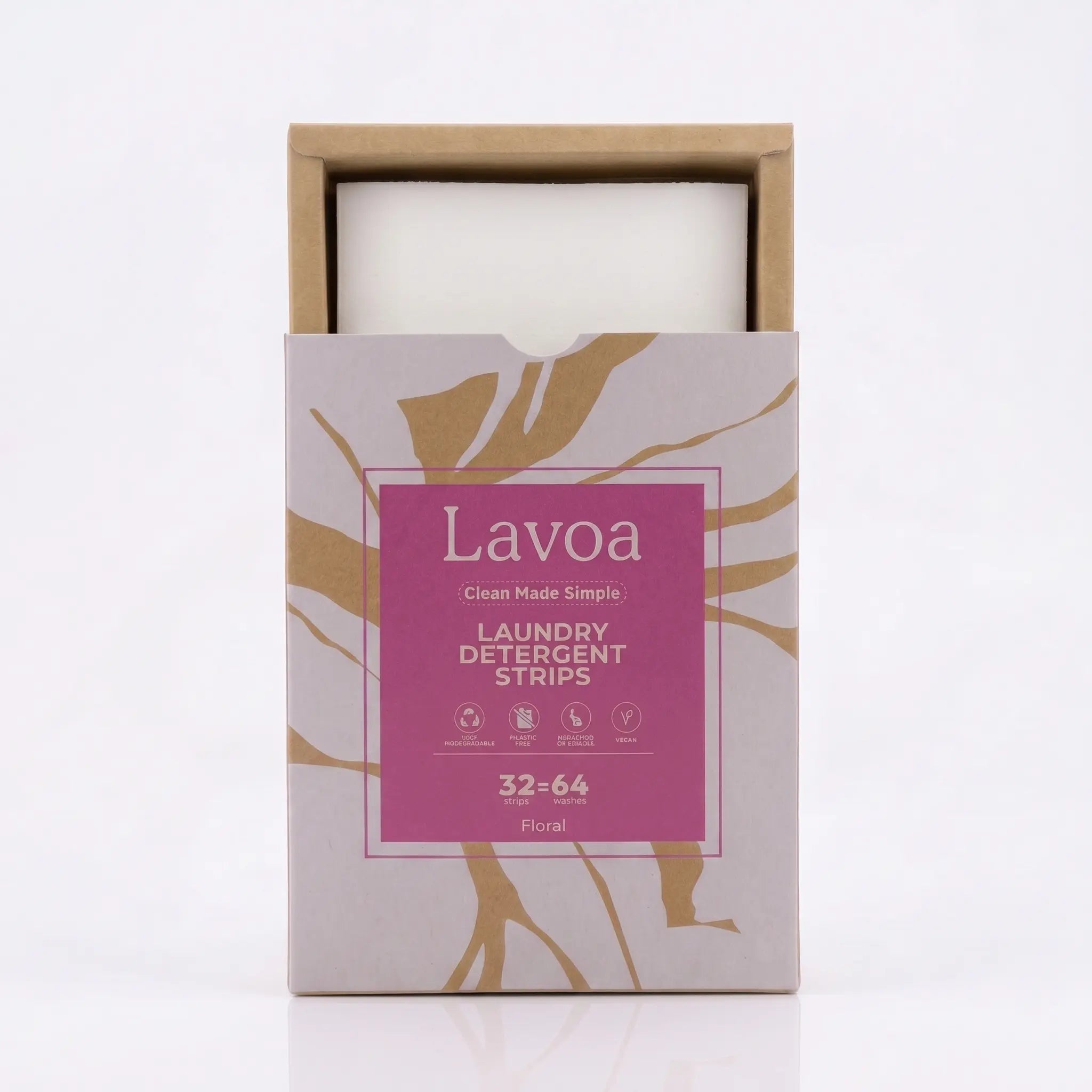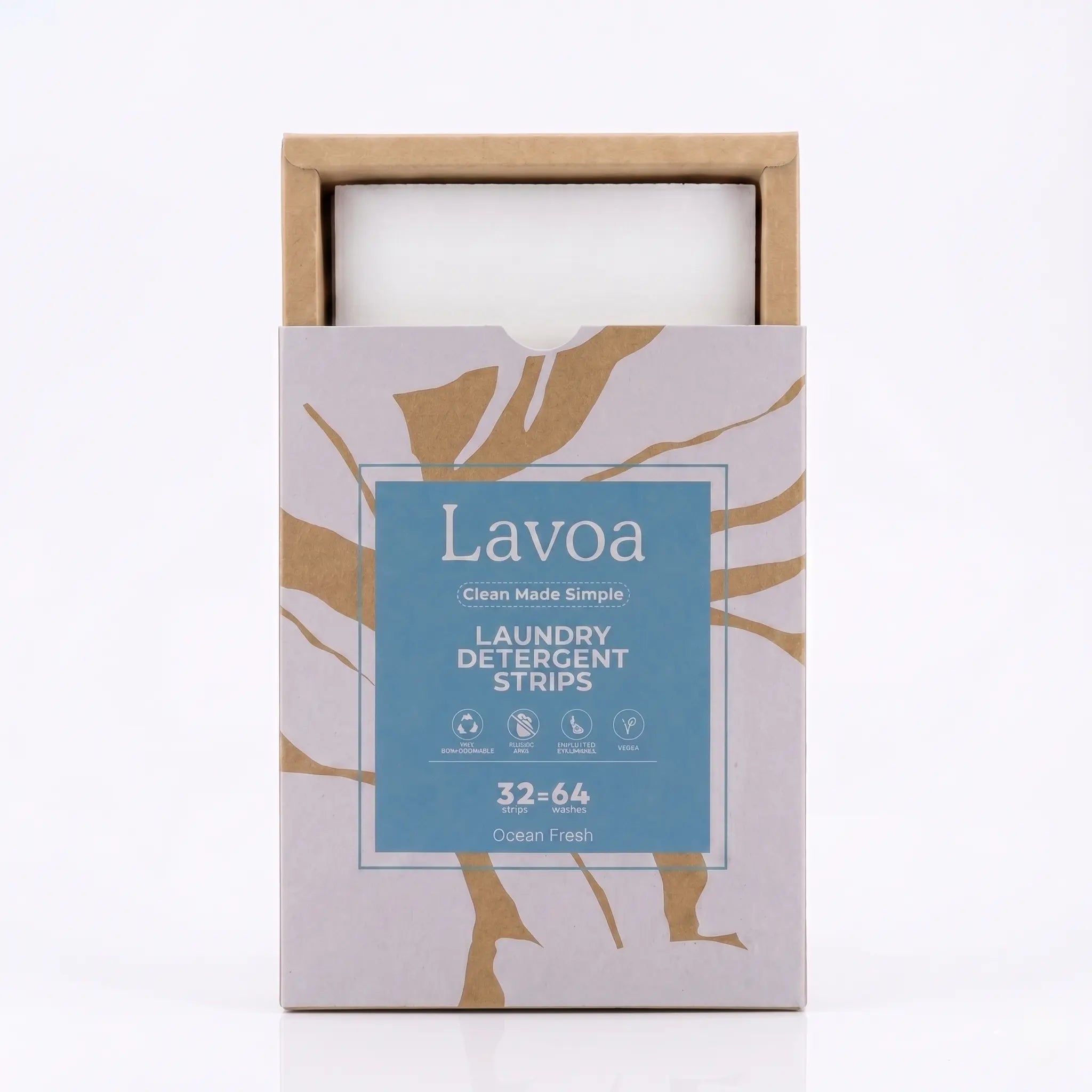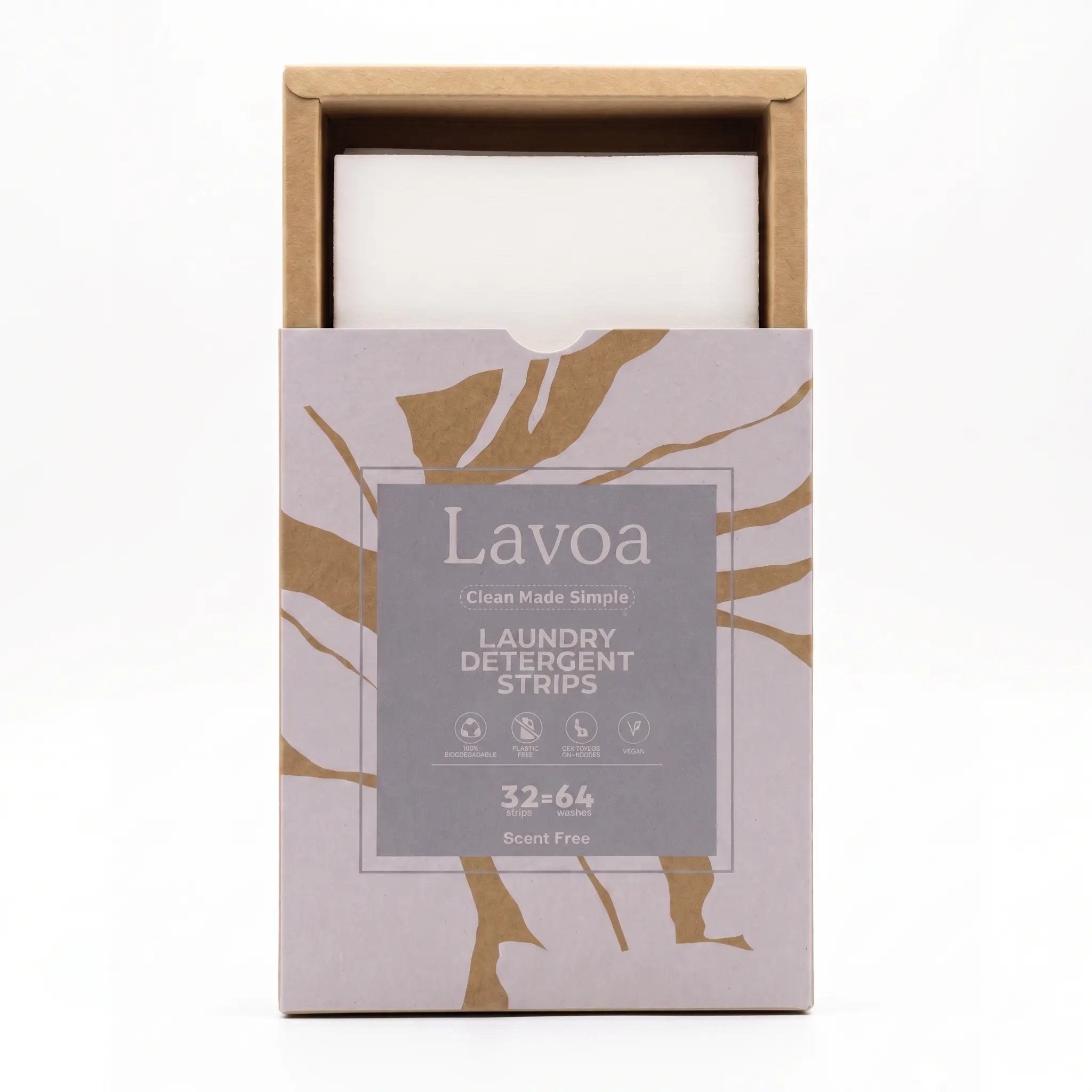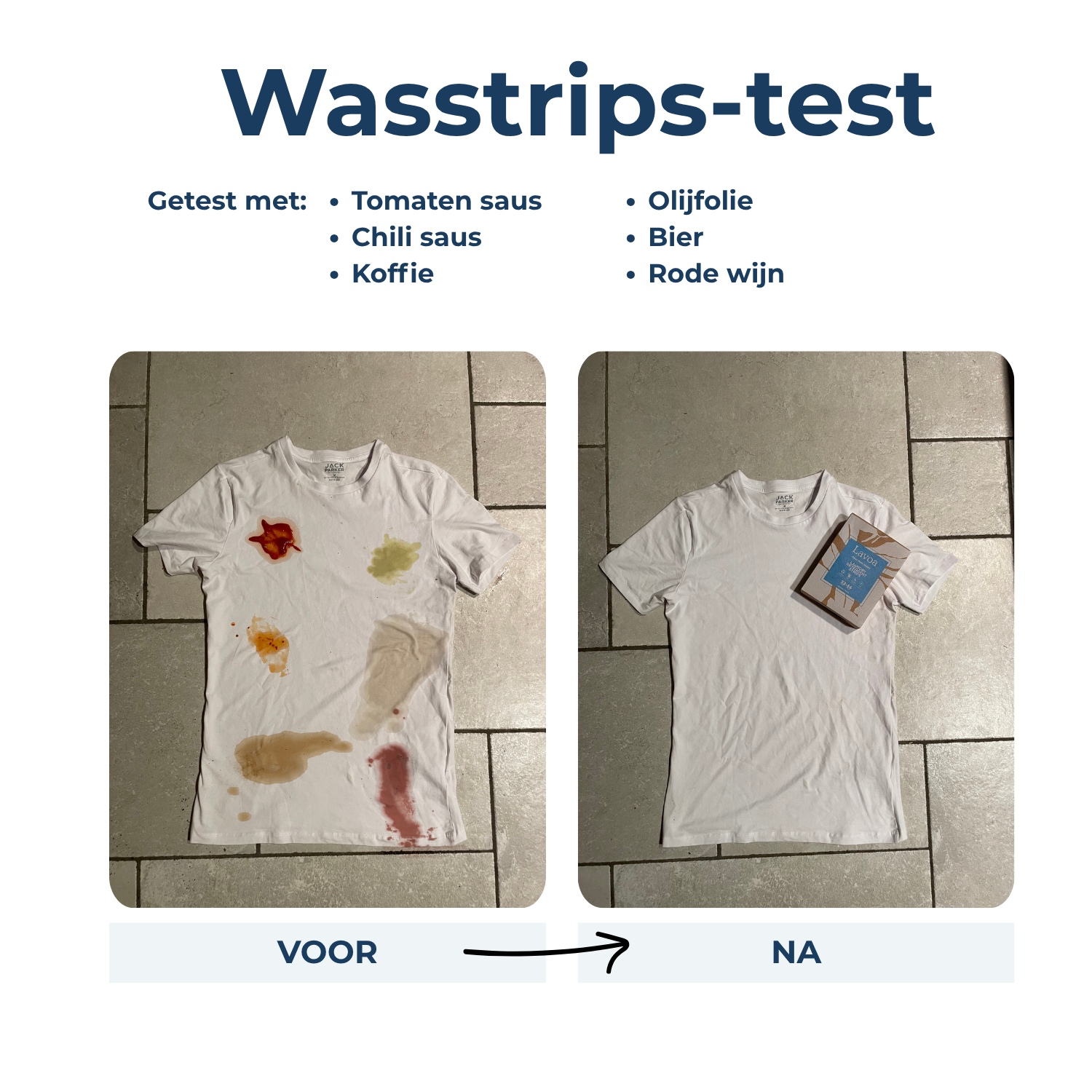
Laundry strips or liquid detergent — which cleans better, which is cheaper, and when should you choose which? An honest comparison without the sales pitch.
How do they both work?
Liquid detergent and laundry strips largely contain the same active ingredients: surfactants that loosen dirt, enzymes that break down proteins and fats, and builders that neutralise limescale in the water. The difference lies not in the chemistry but in the carrier.
Liquid detergent consists of 60 to 80 percent water. This water serves as a solvent for the active ingredients, but does not contribute to cleaning. A laundry strip is concentrated and dry — the same active ingredients, without the water.
The comparison on the key points
| Laundry strips | Liquid detergent | |
|---|---|---|
| Cleaning power | Comparable with normal use | Comparable with normal use |
| Dosage | Exact — one strip per wash | Difficult to measure precisely — overdosing is common |
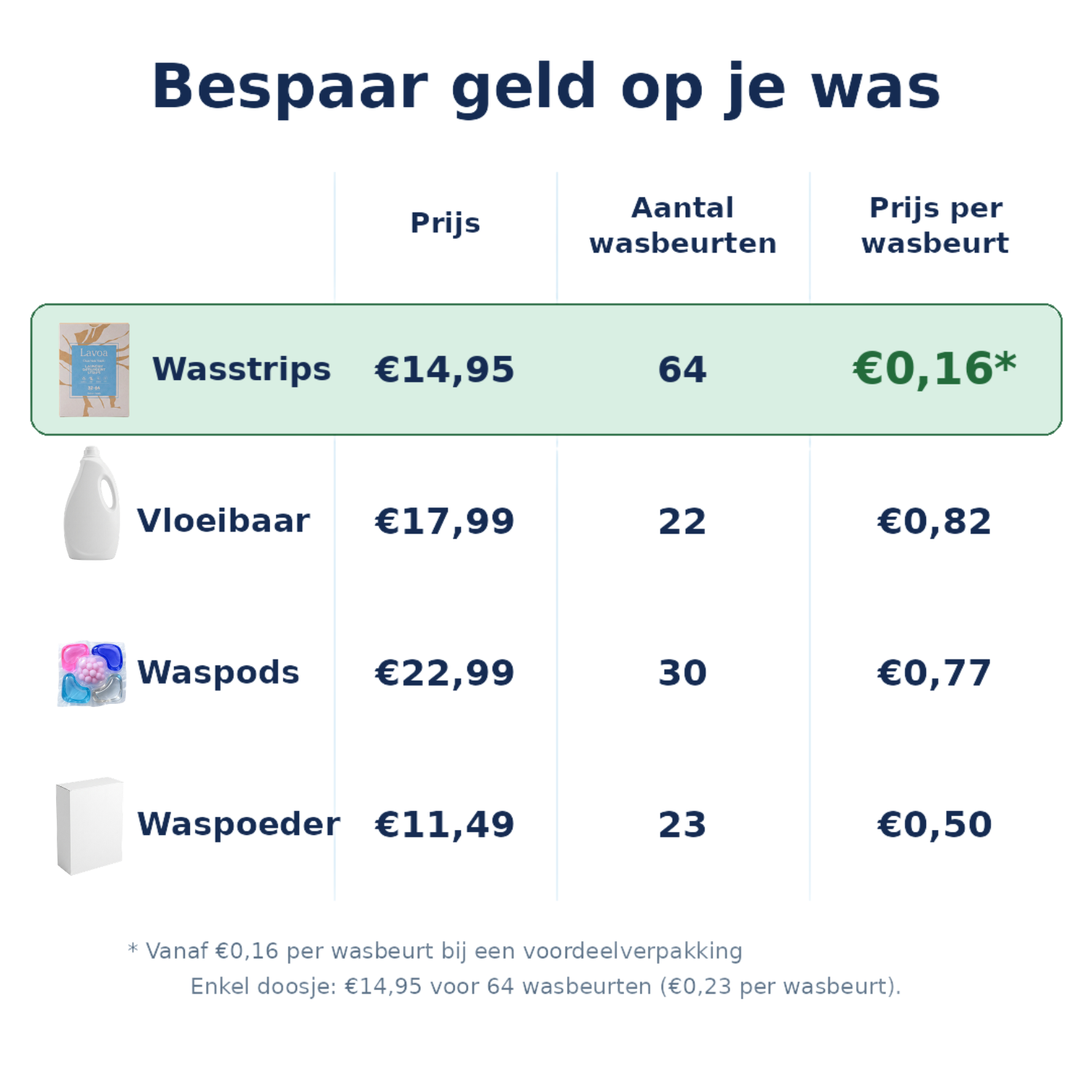
| Price per wash | From €0.16 | €0.15–€0.50 depending on the brand and dosage |
| Weight and size | Light, compact, fits through the letterbox | Heavy, bulky, does not fit through the letterbox |
| Residue in clothes | None — dissolves completely | Possible when overdosed |
| Effect on the machine | No grease buildup | May contribute to grease buildup when overdosed |
| Suitable for sensitive skin | Yes, a fragrance-free option is available | Depends on the brand and formulation |
| Shelf life | At least 2 years, store dry | 1–2 years, store in a cool, dry place |
Where liquid detergent is better
For heavily soiled laundry — workwear, muddy sportswear, heavy stains — liquid detergent offers more flexibility. You can use a higher dose, apply it directly to the stain as a pre-treatment, and adjust it for each load.
Even for people accustomed to a fixed routine with a trusted brand, switching can be a hurdle. That is a legitimate reason.
Where laundry strips are better
Dosage is the biggest practical advantage. With liquid detergent, most people consistently use too much — measuring cups are large, and the temptation to add a little extra to a dirty load is understandable. Soap residue left behind in the fibres attracts bacteria, irritates the skin, and contributes to grease buildup in the machine.
For everyday use, mixed loads, and sensitive skin, laundry strips are the simpler choice. One strip, always the right amount.
- No risk of overdosing — less residue in clothes and the machine
- Compact size — fits through the letterbox, no heavy bottles
- No risk of leaks in the cupboard or suitcase
- Fragrance-free option for sensitive skin and baby clothes
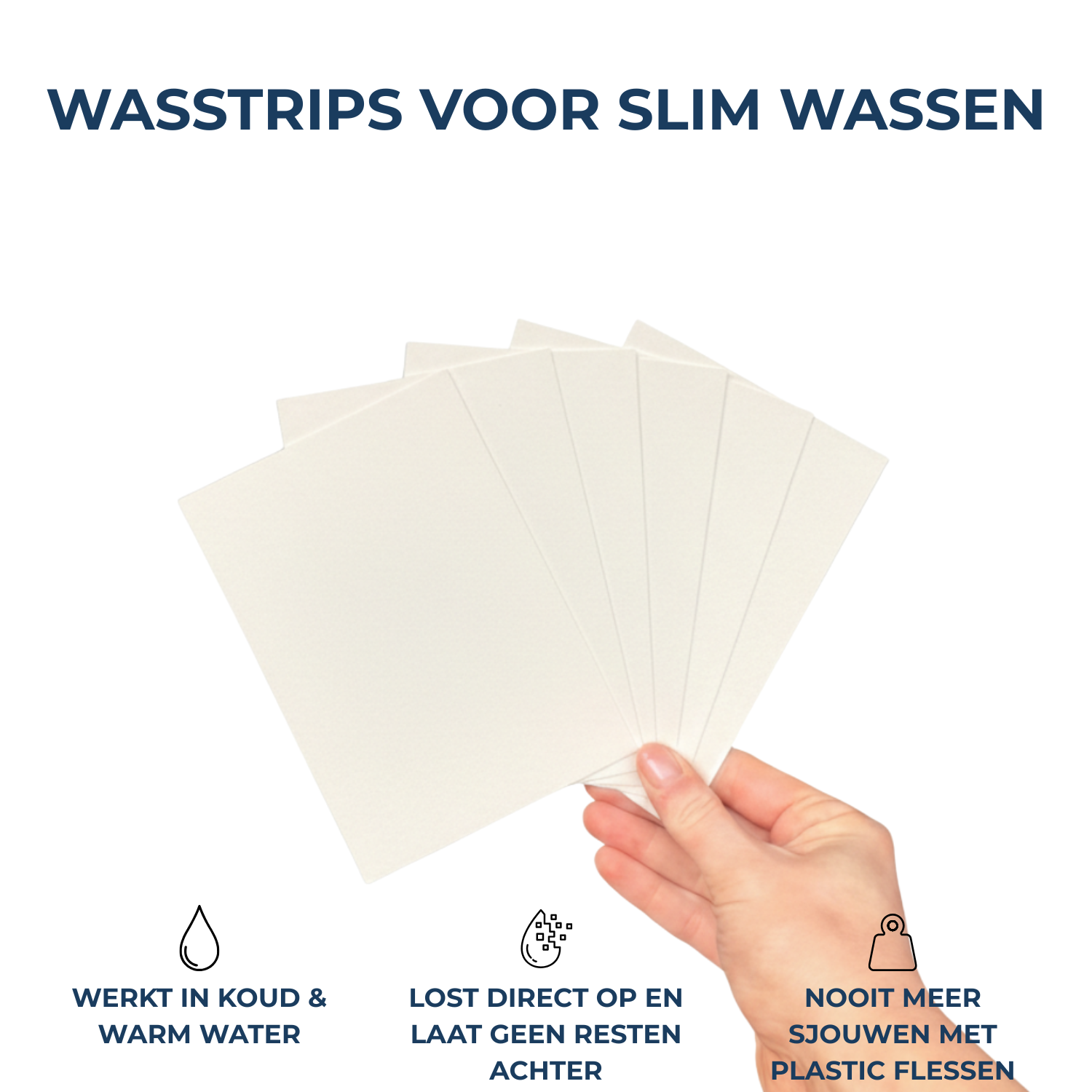
- Works at all temperatures from 20°C to 90°C
Still unsure? The trial pack costs €3.95 and contains enough for three washes — enough to see whether it is right for you.
What about cleaning power on heavy stains?
For pretreating stains, you can tear off a piece of laundry strip, dampen it and dab it directly onto the stain. This works similarly to applying liquid detergent to the stain. For extremely dirty or greasy clothing — such as work gloves or a motocross outfit — liquid detergent with a higher dosage offers more flexibility.
For the average household wash — clothing, bedding and towels — there is no noticeable difference.
Frequently asked questions about laundry strips vs. liquid detergent
Do laundry strips clean as well as liquid detergent?
For normal household laundry, yes. Both contain the same types of active ingredients — surfactants and enzymes. The difference lies in the carrier: liquid detergent consists largely of water, while laundry strips are concentrated and dry. For very heavily soiled laundry, liquid detergent offers more flexibility in dosing.
Are laundry strips cheaper than liquid detergent?
That depends on which brand you compare. Lavoa laundry strips cost from €0.16 per wash. Cheap supermarket-brand liquid detergent may work out cheaper, but leading brands cost more. With liquid detergent, over-dosing also increases the effective cost per wash — with laundry strips, the dosage is precise.
Are laundry strips suitable for all washing machines?
Yes. Laundry strips work in all front-loaders and top-loaders, HE machines and combination appliances. They produce very little foam, making them suitable for economical machines with sensitive sensors too. Always place them directly in the drum, not in the detergent drawer.
Can I use laundry strips as a stain treatment?
Yes. Tear off a small piece of the strip, wet it and dab it directly onto the stain before washing. Leave it to work for 5 to 15 minutes, then wash as normal. This works for most grease stains, grass and coffee.
Why do people choose laundry strips instead of liquid detergent?
The three most frequently mentioned reasons: no hassle with measuring, a compact format that fits through the letterbox, and less chance of soap residue in clothes and the machine. For people with sensitive skin or babies, the fragrance-free variant is also a specific reason to switch.
Compare for yourself for €3.95
Three washes with the trial pack — enough to see whether laundry strips are right for you.
View the laundry strips →