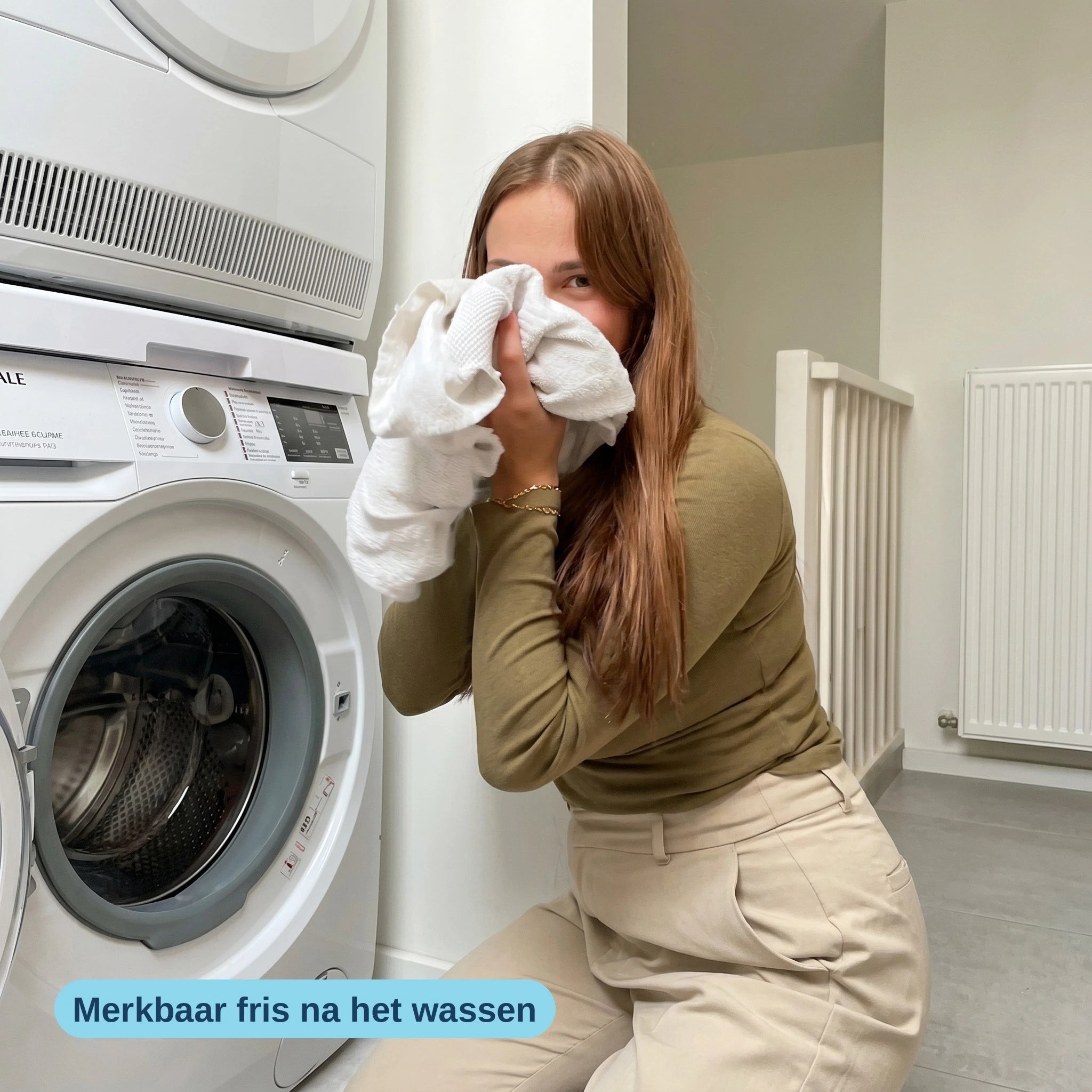
Your sportswear still smells of sweat after washing — even though it is clean. It is not a matter of using too little detergent. It is the fabric, and how you wash it.
Why sportswear still smells after washing
Most sportswear is made from synthetic fibers such as polyester and nylon. They dry quickly and wick moisture well — but they also draw oils and bacteria deep into the fiber. Those bacteria are the real source of the odor, not the sweat itself.
The problem: many detergents are formulated for cotton and work less effectively on synthetic fibers. They remove surface dirt but leave bacteria and oily residues deeper in the fiber. If you do not rinse the clothes thoroughly enough afterward, soap residue also remains in the fabric — and that attracts new bacteria.
Extra detergent does not solve the problem — it actually makes it worse. Soap residue in synthetic fibers traps bacteria and causes the fabric to start smelling faster over time.
The right approach to washing sportswear
✓ Do
- Air it out immediately after exercising — don't leave it in a bag
- Wash at 30–40°C
- Wash inside out
- Use a small amount of detergent — less than you think
- Set an extra rinse cycle
- Hang it up immediately after washing
✗ Don't
- Leaving wet sportswear in a closed bag
- Using fabric softener
- Washing at 60°C or higher
- Tumble-drying on a high setting
- Using too much detergent
Why avoid fabric softener?
Fabric softener leaves a greasy layer over the fibers. With sportswear, that is doubly problematic: it impairs moisture-wicking performance and attracts odor-causing bacteria. After using fabric softener a few times, your running shirt gets dirty faster than before.
Why wash inside out?
Sweat, bacteria, and skin oils cling to the inside of the fabric. Washing clothes inside out brings the detergent into direct contact with most of the dirt.
Getting rid of stubborn odors: what works?
If the odor has already penetrated deep into the fibers, you need something extra. Here are a few methods that work:
Soaking in cold water with vinegar
Soak the sportswear for half an hour in a basin of cold water with a splash of white vinegar (about 100 ml per bucket). Vinegar neutralizes bacteria without damaging the fibers. Then simply wash as usual. Do not pour vinegar into the machine itself — it is not good for the rubber seals.
Baking soda
One tablespoon of baking soda directly in the drum, together with the laundry strip. Baking soda neutralizes odors and helps loosen soap residue from the fibers. Not a miracle cure, but noticeable in stubborn cases.
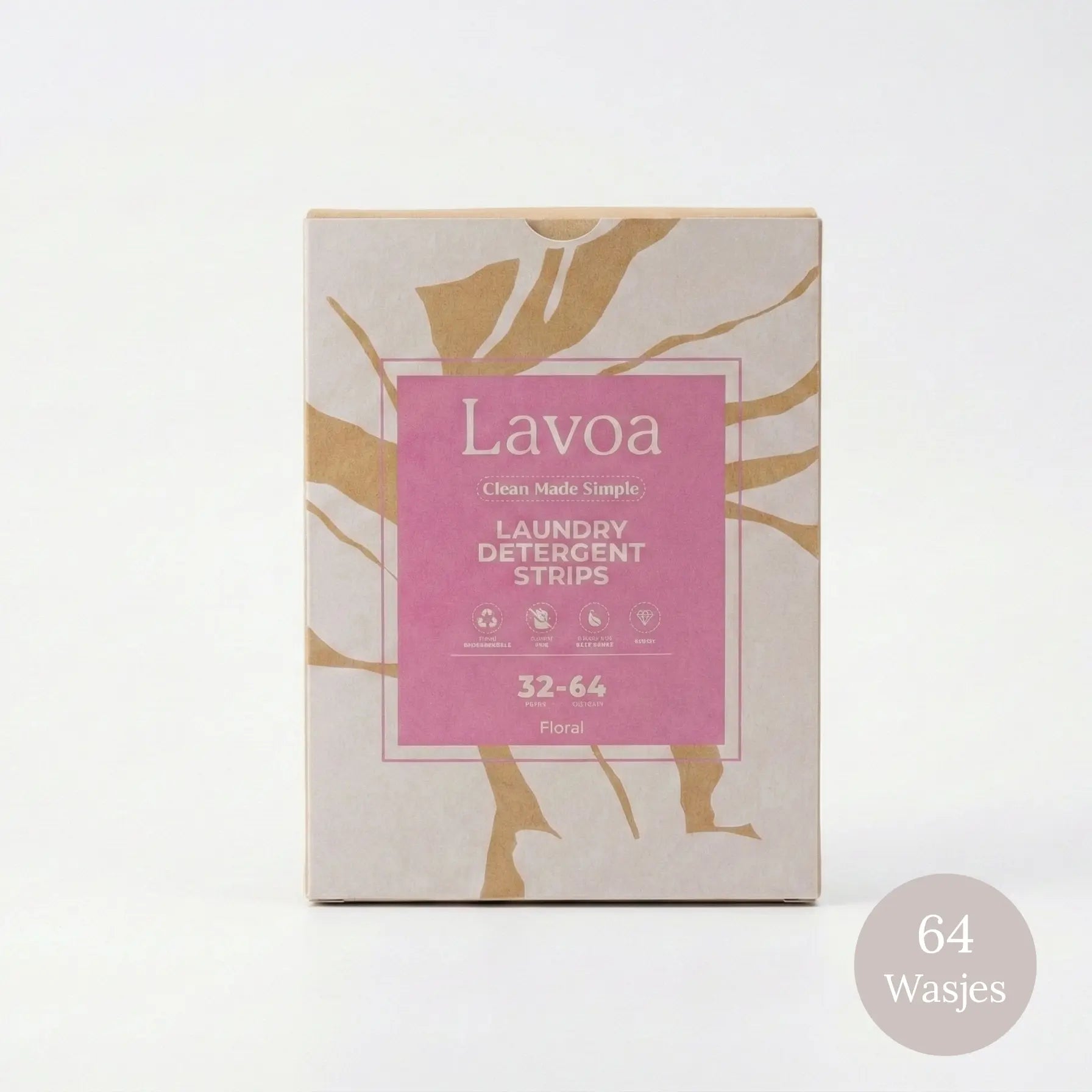
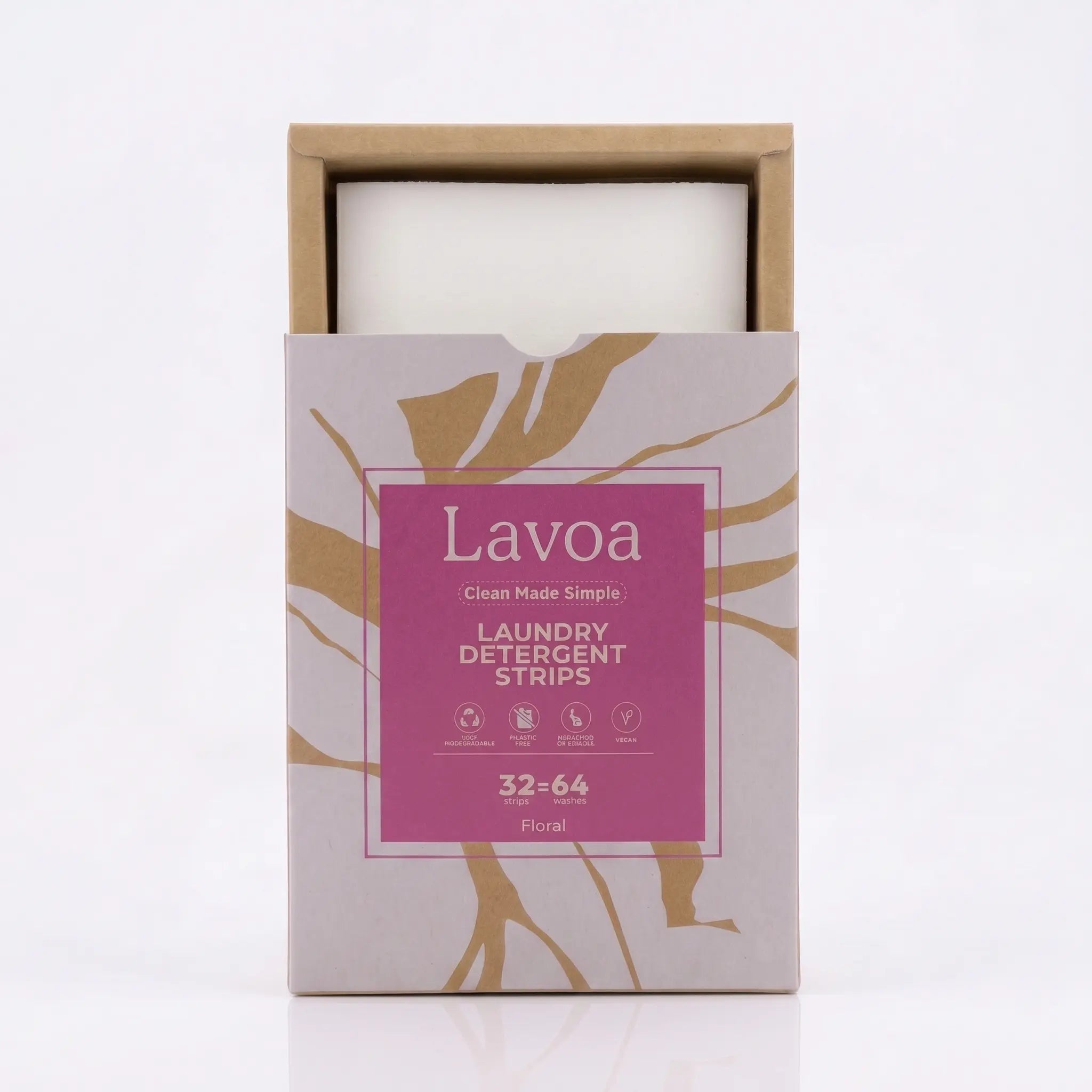
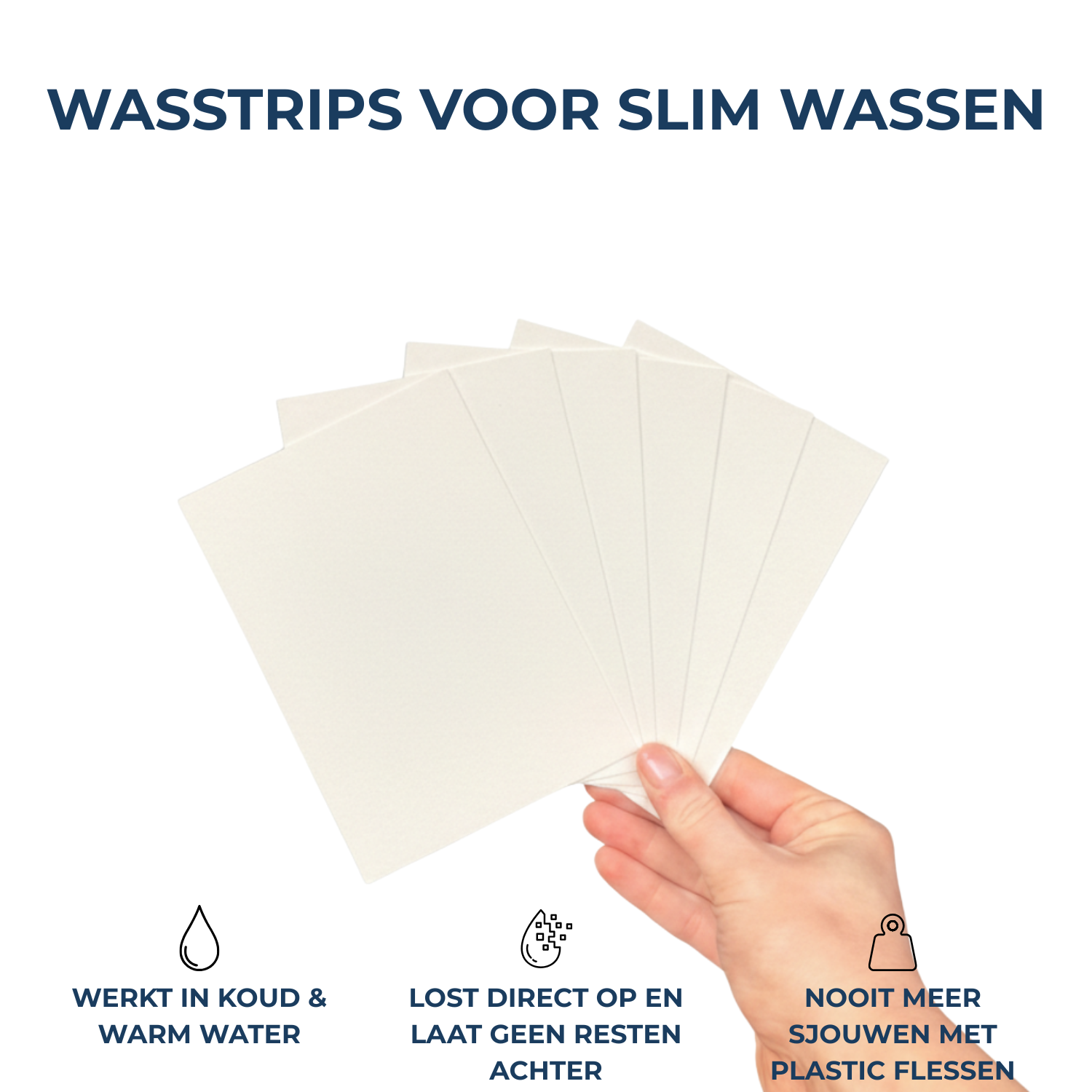
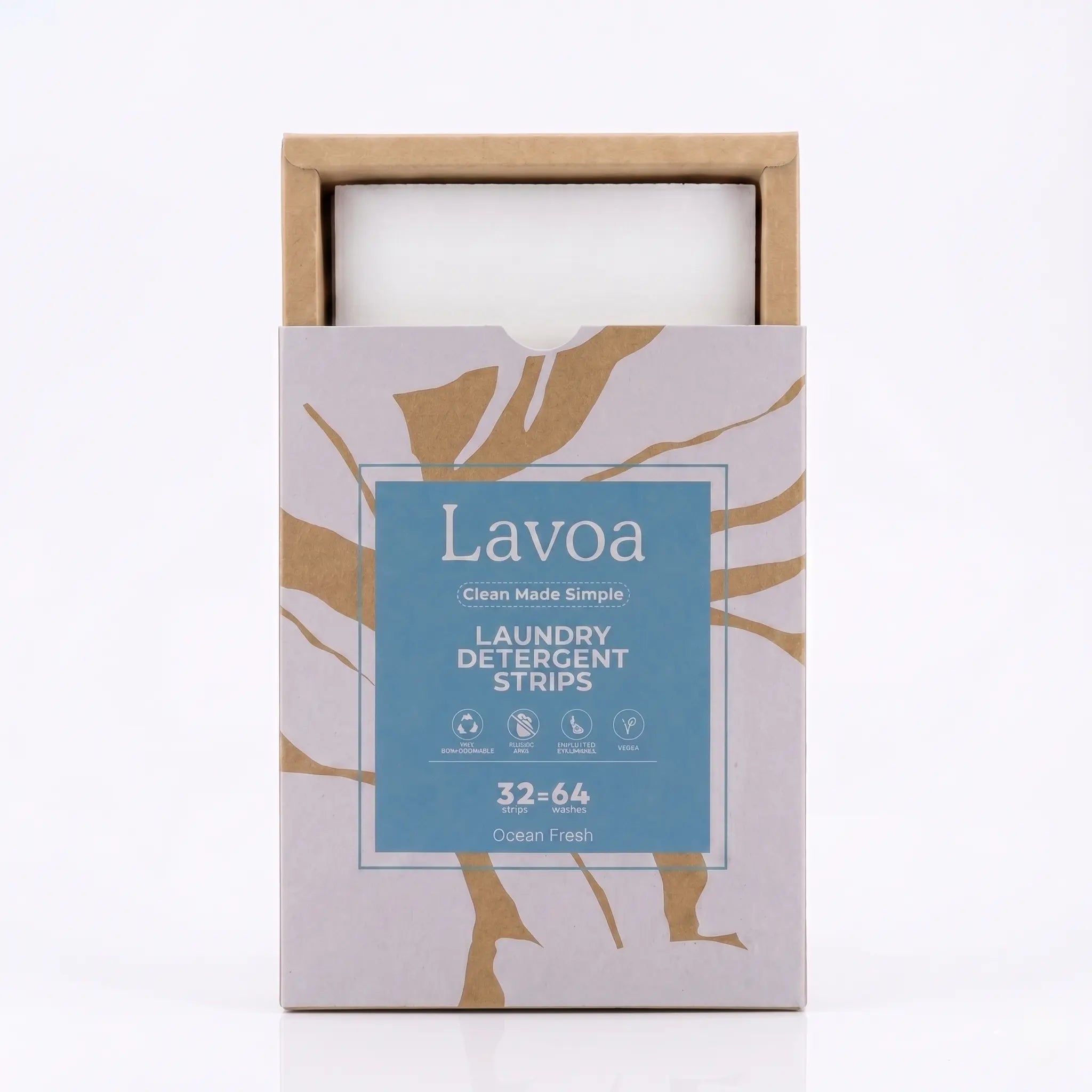
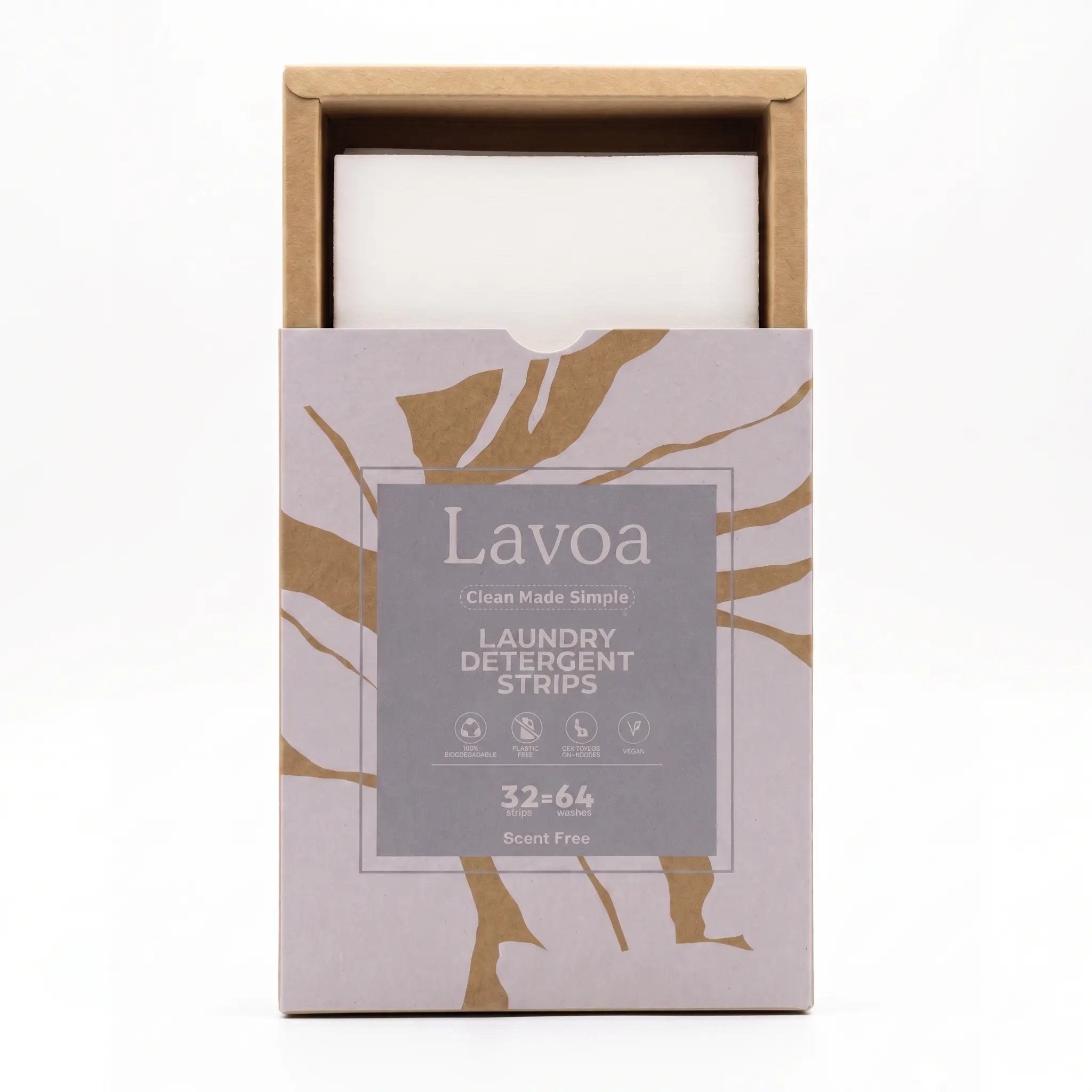
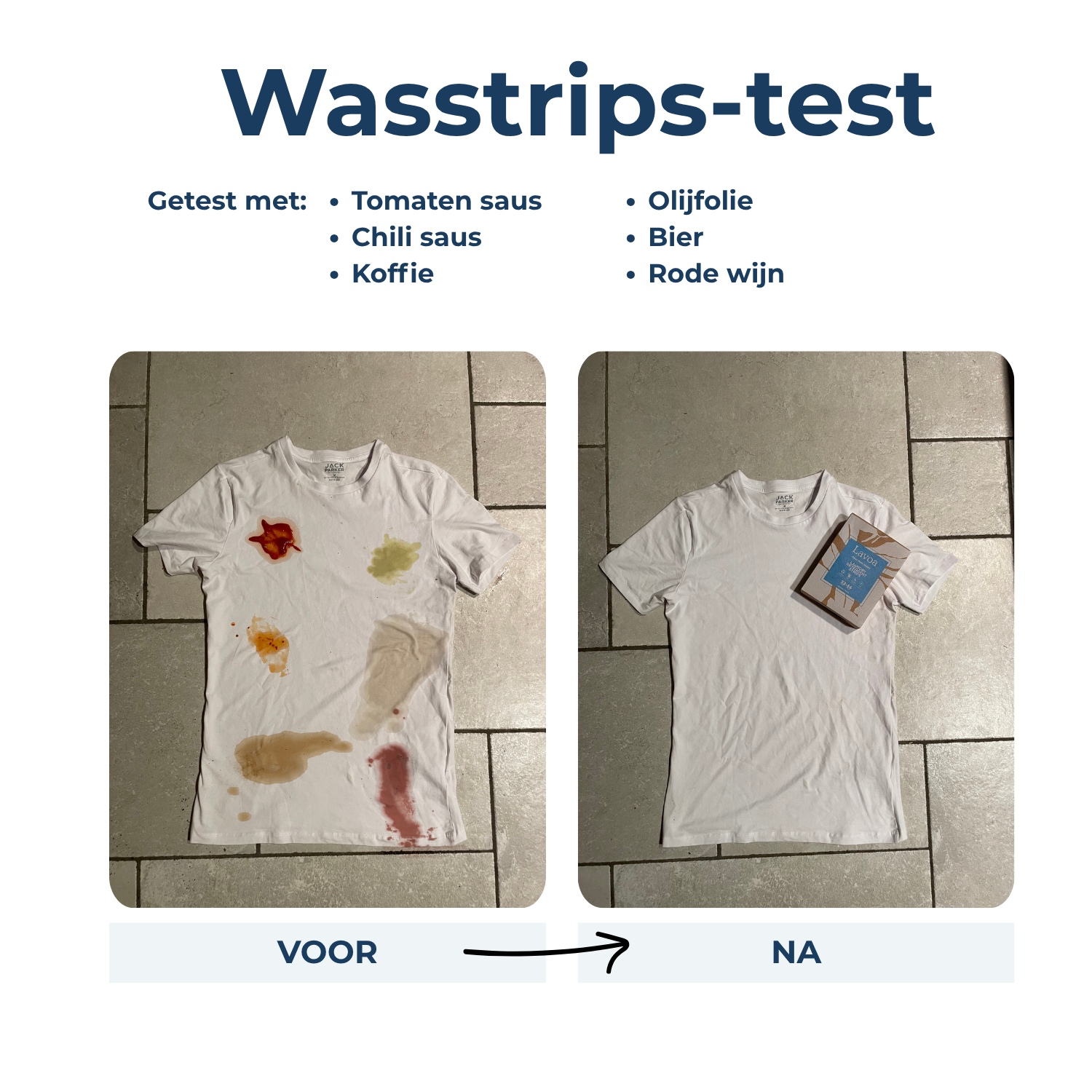
Laundry strips dissolve completely and leave no soap residue in synthetic fibers — exactly what sportswear needs. Combine with an extra rinse cycle for the best results.
Temperature: colder than you think
30°C is the ideal temperature for most sportswear. Synthetic fibres shrink and deform at higher temperatures — and the odour comes from bacteria, not dirt that dissolves with heat. A good laundry strip also dissolves completely at 30°C.
Exception: cotton sportswear such as cotton tracksuit bottoms or a T-shirt may be washed at 40°C. Cotton tolerates more heat and has no coatings that can be damaged.
Drying
Hang sportswear up immediately after washing — never fold it or leave it in a basket. Damp synthetic fabric is an ideal breeding ground for bacteria. Drying it outdoors in the sun works well: UV light effectively kills bacteria.
A tumble dryer on a low setting is suitable for most synthetic sportswear, but check the label. On a high setting, some fabrics may shrink or coatings may dissolve.
Frequently asked questions about washing sportswear
Why does my sportswear still smell after washing?
Synthetic fibres draw bacteria deep into the fabric. Many detergents are formulated for cotton and are less effective at reaching them there. Soap residue in the fibres makes the problem worse — it attracts new bacteria. Using less detergent, an extra rinse cycle and washing the clothes inside out help most.
What temperature should I wash sportswear at?
30°C for synthetic sportswear such as polyester and nylon. 40°C for cotton sportswear. Higher temperatures are rarely necessary and damage coatings and fibres. The odour comes from bacteria, not dirt that dissolves at high temperatures — so washing hotter does not help.
Can I use fabric softener with sportswear?
No. Fabric softener leaves a greasy layer on the fibres that impairs sportswear’s moisture-wicking properties and attracts bacterial growth. After a few washes with fabric softener, your sportswear will start to smell sooner and function less effectively.
How do I remove stubborn sweat odour from sportswear?
Soak the clothes for half an hour in cold water with a splash of white vinegar before washing — this neutralises bacteria without damaging the fabric. A tablespoon of baking soda directly in the drum also helps loosen soap residue. Then wash at 30°C with a small amount of detergent and an extra rinse cycle.
How long can I leave wet sportswear before washing it?
As briefly as possible. Wet synthetic fabric in a closed sports bag is an ideal environment for bacterial growth — after just a few hours, the smell has already penetrated deep into the fibres. Air it out immediately after exercising (out of the bag, on a chair) and wash it as soon as possible.
Keep sportswear fresh without residue
Laundry strips dissolve completely — no soap residue in synthetic fibres and no bacteria that can cling to them.
View the laundry strips →